
Last updated November 15, 2026
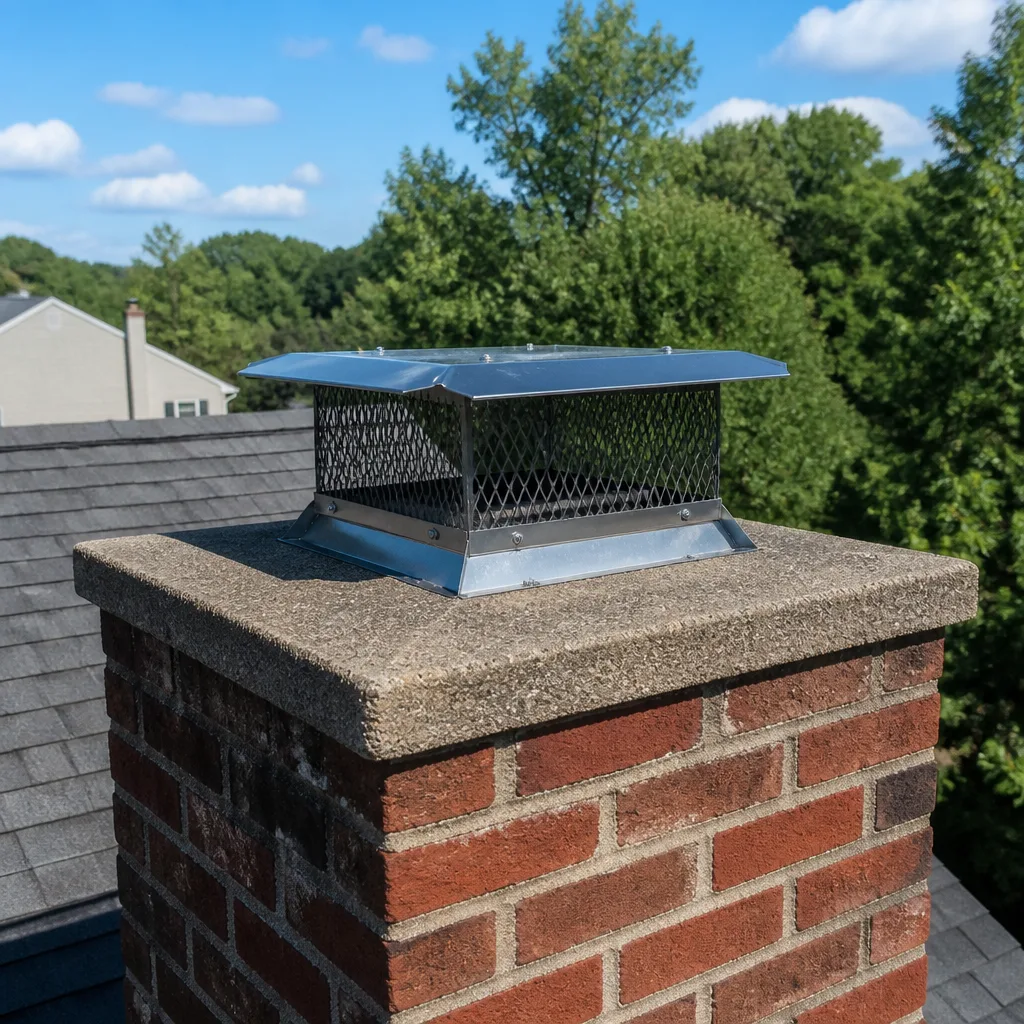 Sweep & inspection
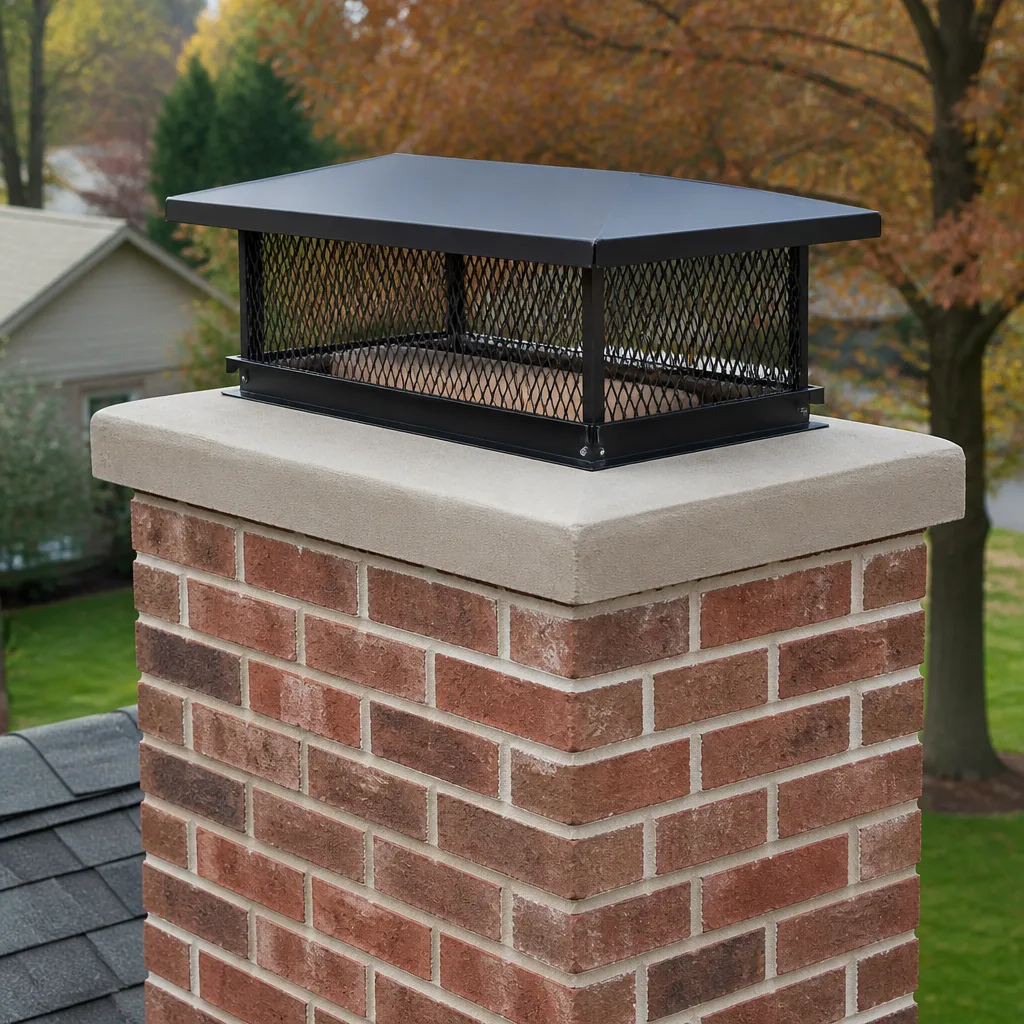 Caps & crowns
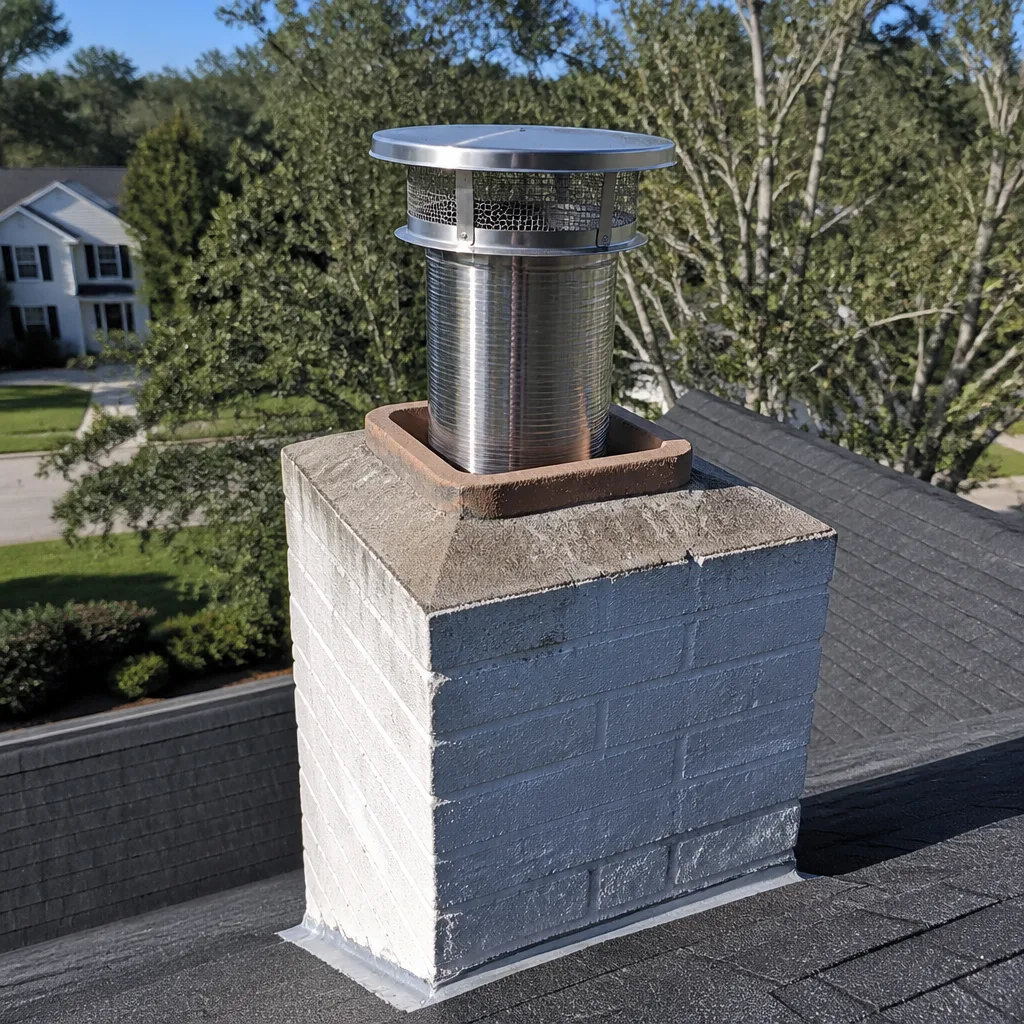 Flue relining
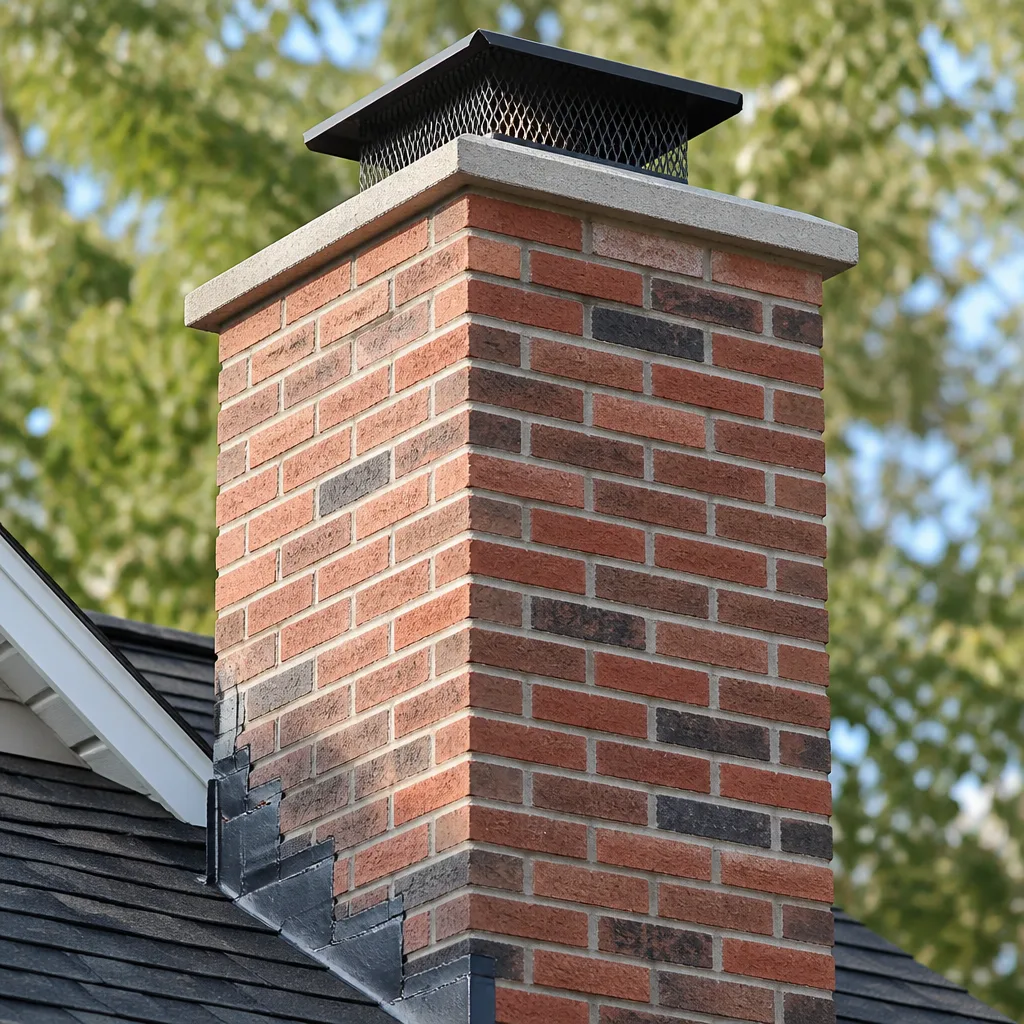 Masonry repair
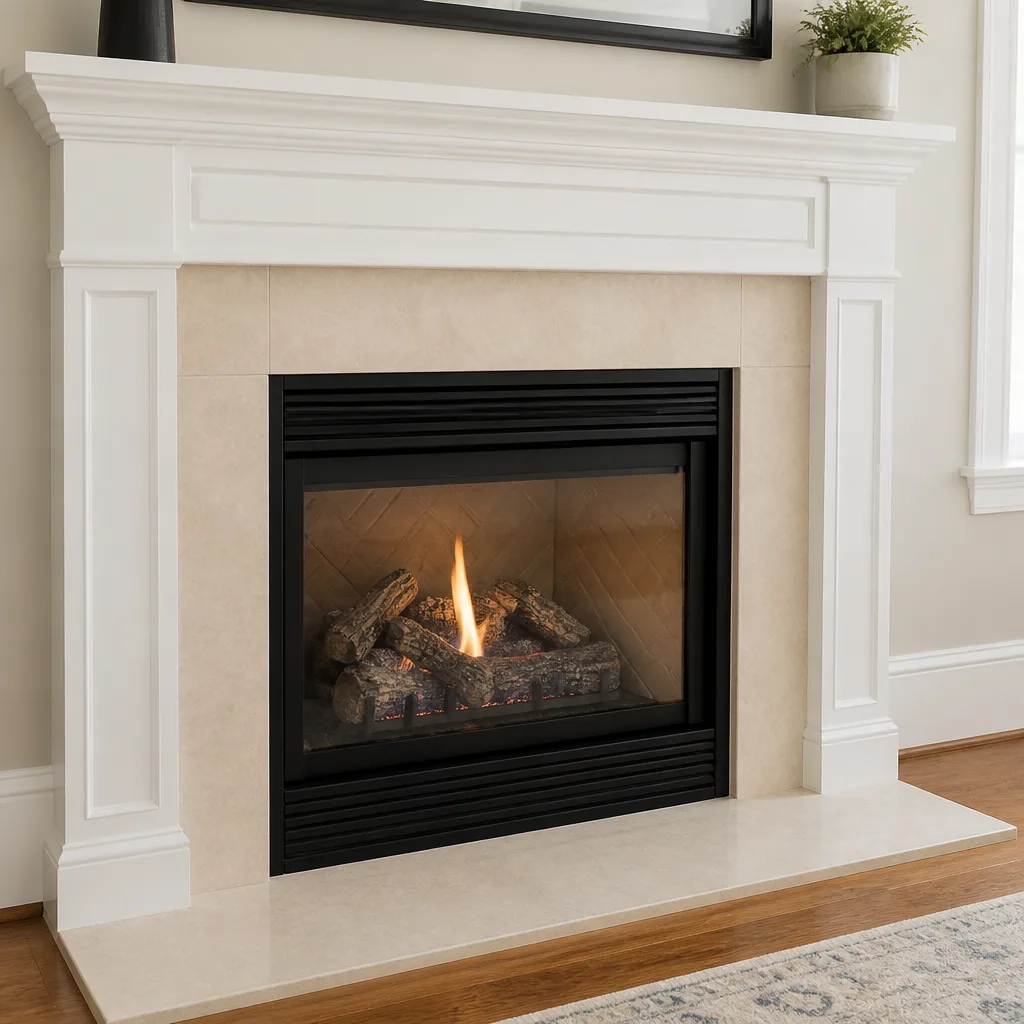 Gas fireplace service
Level 1 sweep and inspection to the NFPA 211 annual standard - flue, crown, cap, and flashing checked and photographed
Chimney sweep logs do not sweep chimneys. They loosen some creosote - which then falls where a brush and vacuum still have to collect it.
Chimney Sweep Maintenance Schedule: What to Do and When
Most chimney advice you’ll find online was written for a cold climate. “Sweep once a year in September” assumes a fireplace burning constantly from October to April, and that’s simply not how homes work in Charleston. Here, a wood-burning fireplace often gets lit a few dozen times a season, and a mild winter means the maintenance calendar has less to do with the month on the wall and more to do with how you actually use the chimney. Follow the cold-climate schedule here and you’ll pay for sweeps you don’t need while the real problems, creosote glaze, a cracked crown, condensation inside a gas liner, quietly build up between visits. This guide walks through a usage-based schedule, a month-by-month reference card built for Charleston’s climate cycle, and the tasks you can safely do yourself versus the ones that need a trained professional.
Quick Answer
There is no single month that works for every Charleston chimney. The right schedule is driven by how many fires you burn, what you burn, and whether the appliance is wood, gas, or wood stove. As a working rule: get a professional inspection once a year regardless of use, sweep a wood fireplace after roughly every cord of wood burned or once creosote reaches about an eighth of an inch, and have any gas insert or wood stove inspected annually even if it seems to run fine. Check your cap and damper yourself before the first fire of the season, and again after the last.
Styles & brands we work with
- Sweep & inspection
- Caps & crowns
- Flue relining
- Masonry repair
- Gas fireplace service
Table of Contents
- Why Charleston Chimneys Need a Different Schedule
- The Usage-Based Maintenance Matrix
- What You Can Do Yourself vs. What Needs a Professional
- A Month-by-Month Reference Card for Charleston
- How to Log Fireplace Use (and Why It Matters)
- Why Gas Fireplaces Still Need Annual Inspections
- When Humidity-Related Problems Show Up
- Questions to Ask Before You Book a Sweep
Why Charleston Chimneys Need a Different Schedule
Charleston’s winters are mild enough that many fireplaces sit unused for weeks and then get a burst of activity during a cold snap. That on-off pattern creates a creosote situation cold-climate advice doesn’t address. A fireplace used heavily and continuously tends to produce creosote at a fairly steady rate, and the once-a-year rule works reasonably well. A fireplace used in short bursts, a weekend cold front, a few holiday evenings, can build up glazed creosote in those first fires if the wood is wet or the flue is cold. The buildup is uneven, hard to predict from the calendar, and easy to miss with a flashlight.
At the same time, the mild climate introduces problems that cold-climate guides don’t cover. Long humid stretches are the enemy of masonry and metal alike. A rain cap that’s slightly loose, a crown with a hairline crack, a chase cover whose sealant has aged, all let in moisture that a homeowner in a dry, freezing winter might never notice. Here, that moisture sits against masonry for months and shows up as efflorescence (white staining), crumbling mortar, or rust streaking around the firebox.
So the honest schedule for a Charleston chimney is three things running in parallel: a usage-based sweep trigger, a seasonal self-check, and an annual professional inspection. Our technicians have up to experience and have seen how differently these systems wear here compared with colder markets. If you’re new to the area, start with an inspection, whether it’s a full chimney sweep or a level-one assessment, so you know exactly where your chimney stands before you set a rhythm.
The two rhythms to keep in mind
- Use rhythm: how many fires and cords you burn, and what wood you use. This drives when a sweep is actually needed.
- Season rhythm: the seasonal changes, humidity, rain, temperature swings, and pollen, that push moisture and debris into a chimney. This drives when you check caps, crowns, and dampers.
Most homeowners only track the first. The second is what causes damage between sweeps in Charleston, and it’s the part most maintenance articles skip.
The Usage-Based Maintenance Matrix
If you remember one thing from this guide, it’s that a sweep is triggered by use, not by a month. Here is a practical matrix you can apply to your own fireplace. Treat the numbers as general benchmarks, not code rules; the exact trigger for your chimney depends on wood quality, flue size, and how well it draws.
When to sweep a wood-burning fireplace by usage
- Recreational use, under half a cord per season: sweep every other season or when creosote reaches about an eighth of an inch. Get an inspection every year. Many low-use Charleston fireplaces fall here, and annual sweeps are often unnecessary. Skipping a sweep is fine; skipping the inspection is not.
- Regular use, half to one cord per season: sweep once per season, typically after the last sustained cold period in late winter or early spring.
- Heavy use, more than one cord per season, or primary heat: sweep once mid-season and again at season’s end. Creosote builds faster than most owners estimate.
- Any use of unseasoned or green wood: check creosote sooner and expect buildup faster. Wet wood is a creosote factory.
- Any use of manufactured logs or paper-heavy fires: inspect sooner as well; these can leave different residues.
How to estimate creosote (without getting it wrong)
You can’t reliably assess creosote by looking up from the firebox with a flashlight. The deposits that matter are higher up the flue, and glazed creosote looks almost like a dark, shiny coating that might be mistaken for metal. A camera inspection shows you the flue wall the way a professional sees it, and it’s the reason we always show homeowners the pictures rather than simply telling them a sweep is due. If a chimney only needs a sweep next season, we say so.
For wood stoves and inserts
Wood stoves and fireplace inserts generally need more frequent attention than open fireplaces because they run hotter and longer and concentrate exhaust in a smaller flue. The same usage triggers apply, but pull the sweep forward by roughly a third: a stove burning half a cord should be swept closer to once a season than once every other. Catalytic stoves also need their combustor checked, which is not a homeowner task.
What You Can Do Yourself vs. What Needs a Professional
There’s a whole category of chimney maintenance that a careful homeowner can and should do. Then there’s a category where a mistake is dangerous, and it belongs with a trained technician. Here’s the split we walk through with customers.
Safe homeowner tasks
- Inspect the cap and spark arrestor from the ground or roof. A chimney cap should be intact, fully seated, and free of bird nests or debris. Loose caps are a common source of water intrusion.
- Test the damper. Open and close it fully; it should move freely. A damper stuck open wastes heat and invites drafts and moisture; one stuck closed is a carbon monoxide risk if you light a fire.
- Visual firebox check. Look for cracked firebrick, missing mortar joints, rust, or unusual staining. Note anything odd to discuss with your sweep.
- Check for water entry inside the firebox after heavy rain. Damps stains, rust streaks, or a musty smell are signs a cap or crown is failing.
- Keep the firebox clear of ash buildup. A clean firebox burns more predictably; leave a thin ash bed for insulation but don’t let it pile up.
- Confirm a working carbon monoxide alarm on each floor. This is not a chimney task per se, but it’s the single most important safety habit for any home with a solid-fuel appliance.
Leave these to a professional
- Anything inside the flue. Sweeping, camera inspection, and any assessment of creosote depth or flue condition belong with a trained technician.
- Crown, chase cover, and masonry repair. Climbing on a roof and repairing masonry is the highest-risk work in chimney care.
- Relining and liner resurfacing. Interior flue restoration requires specialized systems and training. We work with DuraFlex flexible liners and HeatShield resurfacing for exactly this reason: these are the materials the job calls for, not hardware-store substitutes.
- Cap and venting installation. A properly fitted cap (Gelco caps are what we typically install) and correct venting for a stove or gas appliance affect how the whole system drafts.
- Any gas appliance interior work. Gas lines and gas fireplace internals should only be touched by a qualified professional.
If you’re unsure which category a task falls into, ask. It costs nothing to describe what you’re seeing, and it can save you a much larger chimney repair later.
A Month-by-Month Reference Card for Charleston
This is a working calendar, not a rulebook. Adjust by a few weeks either way depending on your own use. Notice how much of it is about moisture and inspection rather than sweeping.
January and February: peak season
This is when most Charleston fireplaces get their heaviest use. If you burn regularly, this is when to watch for a drop in draft, smoke rolling into the room, or unusual smells. Mid-season is also when a heavy user should schedule a mid-season sweep. Between fires, check the firebox for cracks you can see.
March and April: end-of-season check
After the last sustained cold snap, book the seasonal sweep for regular and heavy users. Inspect the cap and crown now, while the weather is mild and roof work is straightforward. This is also the ideal window for any Charleston Chimney Cleaning repair work identified during a sweep, so it can be completed well before the next heating season.
May and June: condensation season arrives
As humidity climbs, the most common problems we see are water-related: damp fireboxes, musty smells, and rusting dampers. Check inside the firebox after any heavy rain. If you notice recurring dampness, the answer is almost always the cap, crown, or chase cover, not the flue itself. Gas appliance owners should watch for condensation in the firebox or around the glass.
July and August: the quiet season
Fireplaces sit unused, but this is prime time for a pre-season inspection and any masonry work, because dry weather makes curing and seals more reliable. If your chimney cap needs replacing, or a crown needs sealing, doing it now avoids surprises in the fall. This is also when we see bird and squirrel nests torn out of dormant chimneys.
September and October: pre-season prep
This is the season most people associate with a sweep, and for good reason. Book your annual inspection now if you haven’t. Test the damper, confirm the cap is intact, get the flue checked, and put in a fresh battery in every carbon monoxide alarm. If you burn wood, this is when your wood should already be split, stacked, and dry.
November and December: first fires
Expect a little smoke and smell on the first couple of fires as the appliance warms. If smoke persists, stop and call for an inspection rather than pushing through it. If you use a wood stove, this is when the last fall cleaning should have been done. Watch your logs: wet wood burned during first-fires conditions is a common source of quick creosote buildup in Charleston chimneys.
Year-round habits
- Inspect the cap and damper at the change of every season.
- Keep a simple log of fires and wood used (more on that below).
- Have the flue inspected annually, even with no use.
- Watch for signs of water intrusion after every heavy rain.
How to Log Fireplace Use (and Why It Matters)
A fireplace log is not a chore; it’s the single best way to make your sweep visits smarter and cheaper. The idea is to replace guesswork (“I think we burned about a cord?”) with real numbers that tell a sweep what the flue most likely looks like before they arrive. That means they can plan the right visit, avoid unnecessary sweeps, and catch problems sooner.
You don’t need an app. A note card on the mantel works. Here is the simplest version.
- Record each fire day. A tick mark for every day you use the fireplace is enough. Stack the ticks by month.
- Note the wood type and moisture. “Oak, seasoned” or “mixed, wet” is all you need. Wet wood is the biggest creosote factor.
- Track cords burned. A full cord is 128 cubic feet; a face cord or a pickup-load estimate is fine as long as it’s consistent.
- Mark anything unusual. A smell, smoke rolling in, a hard start, a loud crack, a new stain in the firebox. Write it down.
- Record service visits. Date, what was done, and whether the flue was swept or just inspected. This history is genuinely useful if you ever sell the house.
Bring that log to every conversation with your sweep. It’s the opposite of over-servicing: it gives the technician the evidence they need to tell you honestly “you don’t need a sweep until next season” or “you’re burning faster than a typical household, so we should check mid-winter.” If you’re looking for a skilled local sweep to work with, Charleston has no shortage of options; a good one will ask for this kind of detail without prompting.
Why Gas Fireplaces Still Need Annual Inspections
A gas fireplace that lights quickly, burns cleanly, and never smells is easy to ignore. That’s the trap. Gas appliances don’t produce creosote, but they produce moisture, and moisture in a gas flue can do a lot of quiet damage over time.
When natural gas or propane burns, it produces water vapor. In a properly designed, properly sized vent, that vapor exits up the flue and out the cap. But in a flue that’s too large for the appliance, in a chimney with a failed liner, or in a cap that’s blocked, that moisture condenses on the interior walls. Condensation can:
- Rust metal liners and firebox components from the inside out.
- Stain masonry and drive spalling, where the brick face flakes off.
- Produce a musty smell inside the room even when the fire is off.
- Mask a venting problem that puts exhaust into the home instead of up the flue. That’s the scenario you want to know about before it becomes a carbon monoxide concern.
That’s why a gas fireplace “that seems fine” still needs an annual inspection, and why we treat gas inserts as a real maintenance item rather than a decorative appliance. The interior of the firebox, the venting, and the connections should be assessed by a qualified technician, and any gas line work should be done by a licensed gas professional. If your appliance is vented through an old masonry flue, the flue’s condition matters just as much as the gas appliance itself. This is part of why we use Ohm Chimney and liner systems designed for the appliance rather than fitting whatever is on hand. The right lining system depends on the appliance, and the wrong one creates the condensation problem it’s meant to prevent.
A simple gas-fireplace annual check
- Note any change in flame appearance (color, height, lift-off) since last season.
- Look for condensation, dust, soot, or a white residue near the glass and firebox interior.
- Confirm the vent termination outside is clear and undamaged.
- Book an annual professional inspection and have the flue assessed.
- Confirm carbon monoxide alarms are working on every level.
When Humidity-Related Problems Show Up
Charleston’s humid stretches are the reason a schedule made for dry climates misses half the story. As summer humidity climbs and then falls back, the components of your chimney system go through regular cycles of absorbing and releasing moisture. The places this shows up most often:
- Late spring through early fall: the peak window for damp fireboxes, musty smells, and rust streaks. This is when a failing cap or crown becomes noticeable.
- Right after heavy rain events: water in the firebox or down the flue is the clearest sign of a water-entry problem.
- After prolonged wet periods: efflorescence (white powdery staining on brick or mortar) often appears above the roofline.
- At the first fires of the season: a smell that doesn’t go away after a couple of fires can be a sign of lingering moisture, not just a cold flue.
Most of these are cheap to fix when caught early: a properly fitted cap, a sealed crown, a new chase cover. They’re expensive to fix when ignored, because moisture damage turns into masonry repair. If you’re seeing white staining on your exterior chimney or persistent dampness in the firebox, that’s the time to have a professional look at it. The good news is that local brick-and-mortar chimneys in Charleston are built with masonry that tolerates moisture reasonably well when the cap and crown are doing their job. Most of what we see is preventable from the top of the chimney. Call (866) 864-1983 for a free estimate if you’d like us to take a look.
Questions to Ask Before You Book a Sweep
The right questions turn a sweep visit into a genuinely useful service, and they help you spot a contractor who’s just there to sell you something. Here’s what we think every homeowner should ask before booking.
- Will you show me the camera images? A serious sweep documents what they find. If you’re told you need a liner or a repair, you should be shown the evidence, not just told about it.
- Do I actually need a sweep this year, or just an inspection? A good technician will tell you the difference. If you’re a light user, the honest answer might be “inspection only.”
- What did you see inside the flue? Ask for the creosote depth and condition of the flue walls. This is the number that tells you when the next visit is warranted.
- If a repair is recommended, what are my options? There are usually multiple paths. Liner replacement, HeatShield resurfacing, and cap replacement each solve specific problems; a technician should explain why a given repair fits your situation.
- Can you install the cap and venting you’re recommending? Some contractors diagnose and leave you to source parts from a hardware store. We install what we recommend: Gelco caps, Famco venting, and DuraFlex or Copperfield liners as needed.
- Is anything urgent, and is anything safe to defer? A trustworthy answer separates today’s problem from next season’s project.
These are the same questions we welcome on the phone. If a previous contractor told you a liner is needed and you couldn’t verify it, that’s worth a second look.
Common Mistakes to Avoid
- Following a cold-climate schedule in a mild climate. Annual sweeps on a lightly used Charleston fireplace often waste money, while the annual inspection is what actually catches problems. Separate the two.
- Skipping a gas insert because it “seems fine.” Condensation inside a gas flue can damage a liner quietly for years before you notice anything. Annual inspections matter even for gas.
- Assessing creosote from the firebox with a flashlight. What matters is higher up the flue, and glazed creosote can look like harmless dark metal. Ask to see the camera images.
- Burning wet wood to stretch your supply. Green or wet wood produces much more creosote than seasoned wood, and a single season of it can put you out of step with your schedule.
- Ignoring cap and crown problems until the first cold snap. Water intrusion between seasons is the most common cause of expensive masonry repair here; catching it in spring or summer is far cheaper than catching it after damage has set in.
- Relying on a cap that isn’t properly fitted. A loose or undersized cap lets water and wildlife in, and generic caps from the hardware store are often the wrong size. Proper fit matters more than the price tag.
- Treating “no visible problem” as “no problem.” Interior flue damage is invisible from below. A camera inspection is how it’s caught before it becomes a serious repair.
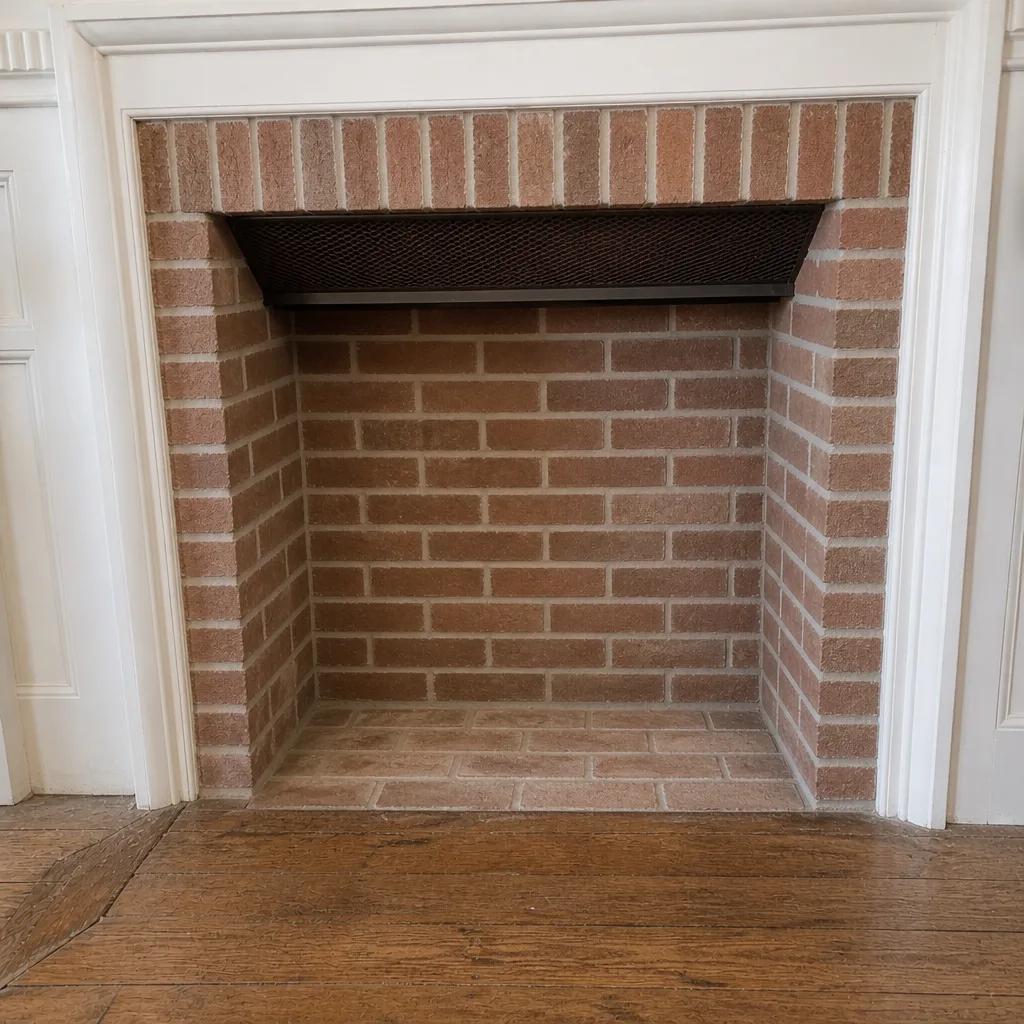
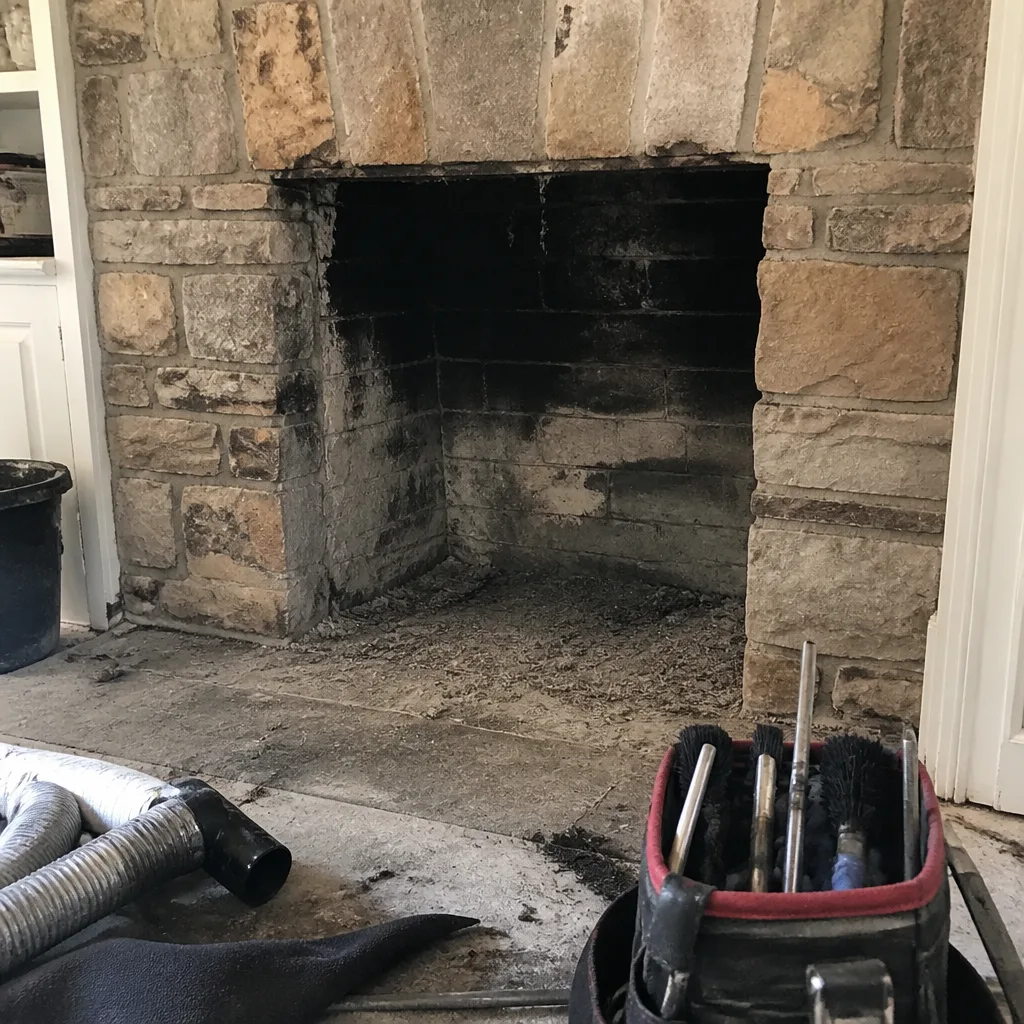
See the difference
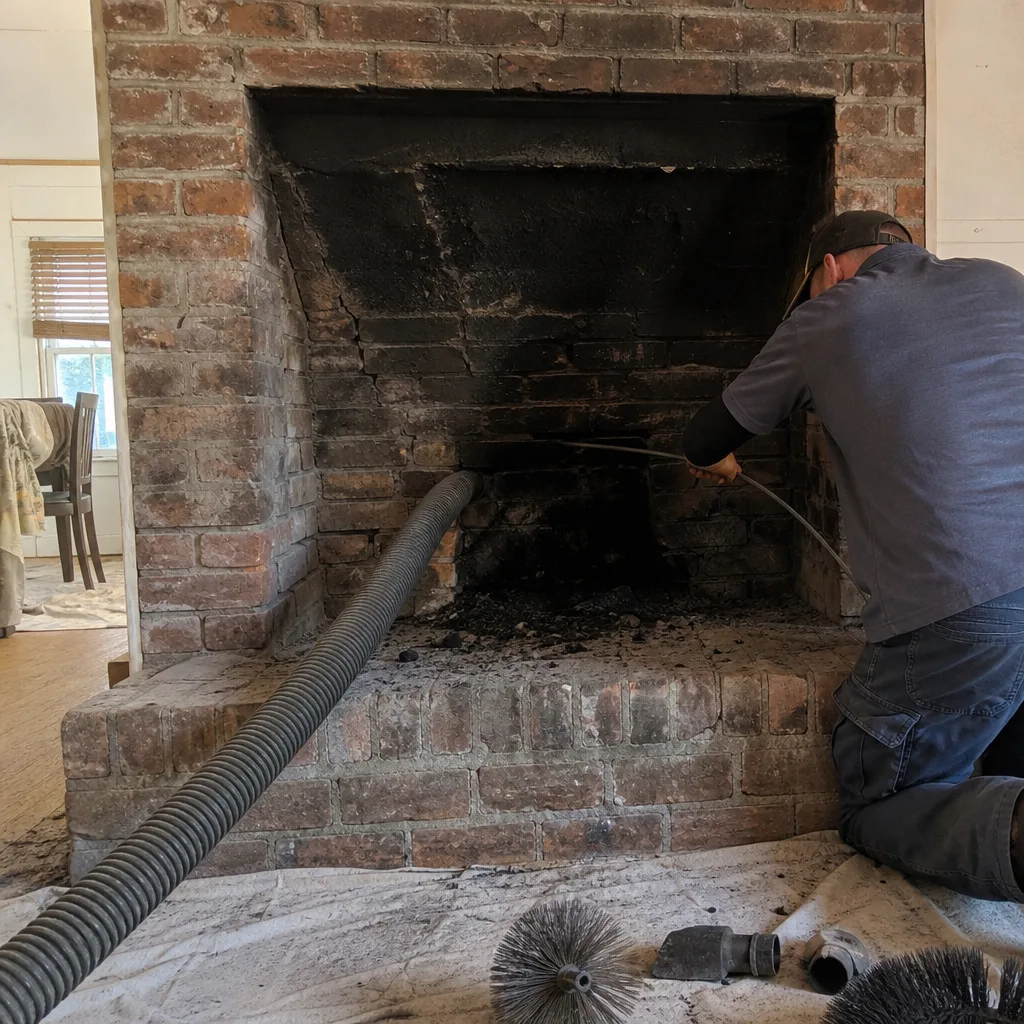 Before
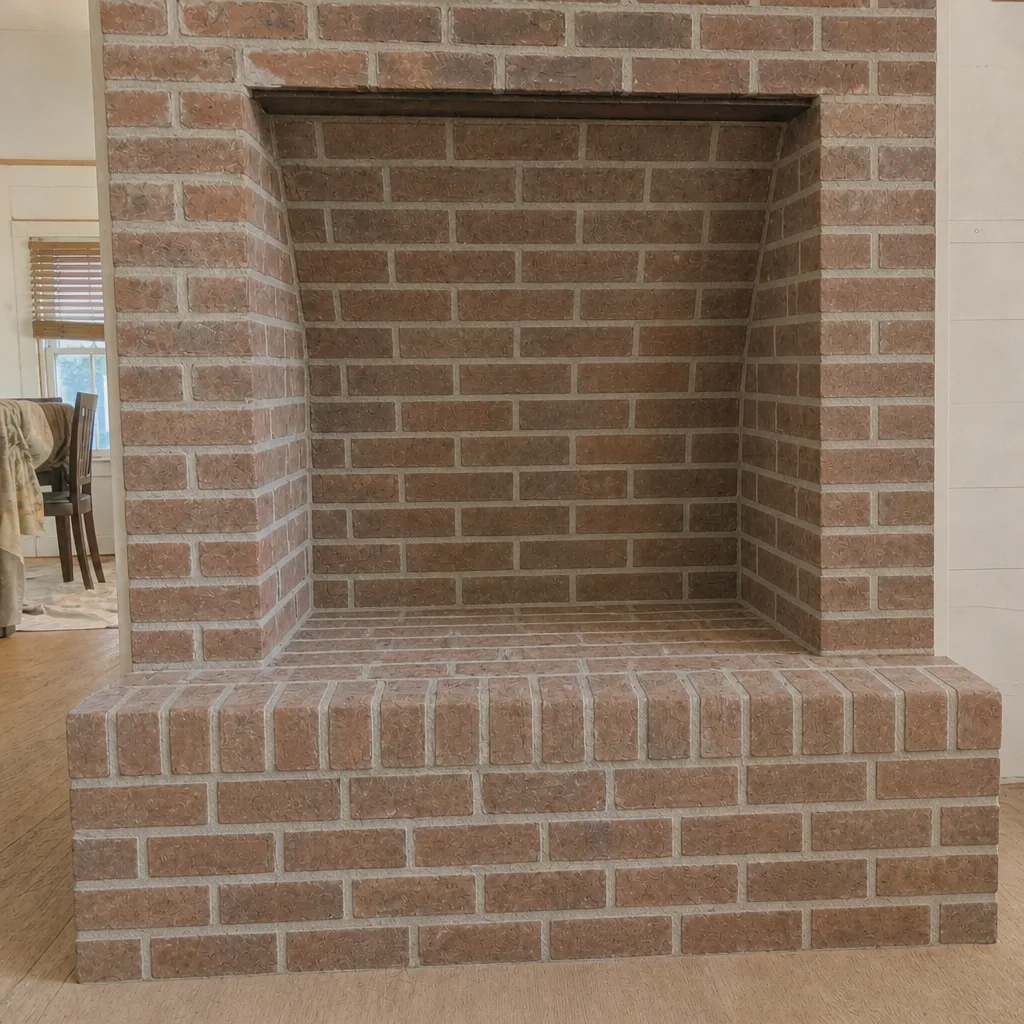 After
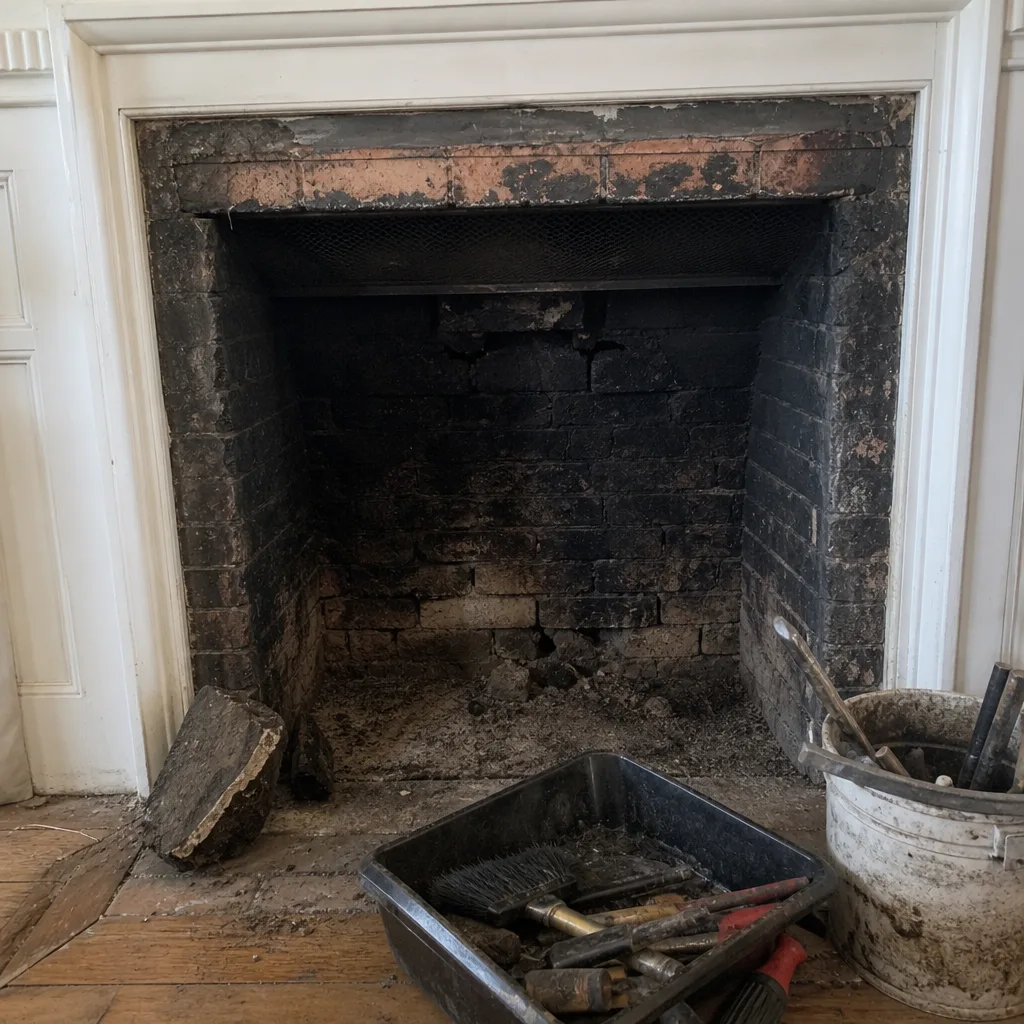 Before
 After
 Before
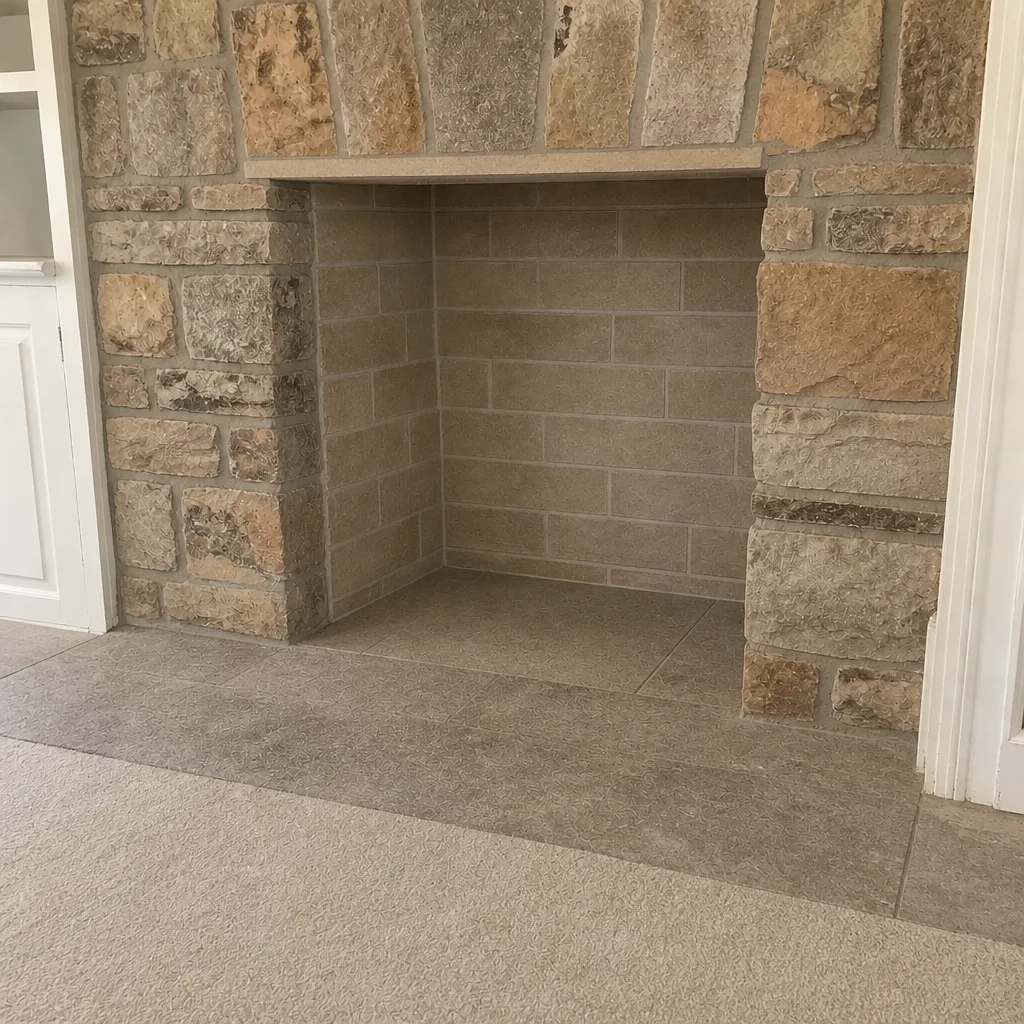 After
When to Call a Professional
Some situations are not a matter of scheduling. Call a professional if you smell gas near a gas fireplace, if you notice soot or smoke spilling into the room, if a firebox brick is cracked or missing mortar, if you see water or rust inside the firebox, if the damper is stuck, if your carbon monoxide alarm sounds, or if a technician has flagged a structural issue you want a second opinion on. In any of those cases, stop using the fireplace until the problem is assessed; gas lines and interior firebox issues especially should never be a DIY project.
Charleston Chimney Cleaning offers free estimates in Charleston, call (866) 864-1983. We answer 24/7, with fast dispatch from 7am to 7pm, Sunday through Friday. Nothing is recommended without camera evidence you can see for yourself, and we’ll tell you plainly when work can safely wait.
Frequently Asked Questions
For a lightly used wood fireplace, every other season is often enough; for regular use (half a cord or more per season), once per season; for heavy use or a wood stove, once mid-season and once at season’s end. A professional inspection every year is the reliable baseline regardless of use, and a camera check tells you exactly when a sweep is due. Call (866) 864-1983 for an exact quote. Estimates are free.
Only if the flue is actually failing, and that’s a fact a camera inspection can show you. A liner that’s cracked, corroded, or undersized for the appliance is a genuine safety issue, but a liner recommended without evidence is worth a second opinion. We show the images and explain what we found, and when a repair can wait, we say so. Call (866) 864-1983 for a free estimate.
The main risks are creosote buildup leading to a chimney fire, water intrusion causing masonry damage, and hidden problems with gas venting. Wood-burning fires with heavy creosote build-up are the highest-risk scenario, and the risk climbs quietly rather than announcing itself. Annual inspection catches most of these early. If you’re overdue, book an inspection rather than a sweep. Call (866) 864-1983 to discuss.
Yes. A gas appliance that seems fine can still have a venting or condensation problem that isn’t visible from the room. Annual inspections are how those problems get caught before they turn into a liner or masonry repair. Any gas line work itself should be handled by a licensed gas professional. Call (866) 864-1983 for a free estimate on an inspection.
You can and should handle the low-risk tasks: checking the cap from the ground, testing the damper, visual firebox checks, watching for water entry, and keeping carbon monoxide alarms working. Anything inside the flue, along with crown, masonry, and liner work, is best left to a trained technician. Call (866) 864-1983 if you’d like to know exactly what you can safely do yourself.
Late winter through early spring for the end-of-season sweep, and September or October for a pre-season inspection. Summer is the smartest window for any masonry or cap work, because dry weather makes seals and curing more reliable. If you’re unsure where you stand, book an inspection, not a sweep. Call (866) 864-1983 for a free estimate.
The Bottom Line
The point of a maintenance schedule isn’t to do the most work; it’s to do the right work at the right time. In Charleston, that means an annual inspection as your anchor, a sweep triggered by how much you actually burn, and a seasonal loop of cap, damper, and water-entry checks that catches the problems cold-climate advice misses. Track your fires with a simple log so your sweep can give you straight answers. Check your gas insert even when it seems fine. And when a repair is recommended, ask to see the evidence. If you’d like a schedule built around your specific fireplace and how you use it, call (866) 864-1983 for a free estimate. We answer 24/7, with fast dispatch from 7am to 7pm, Sunday through Friday.
Written by the team at Charleston Chimney Cleaning.