
Last updated November 15, 2026
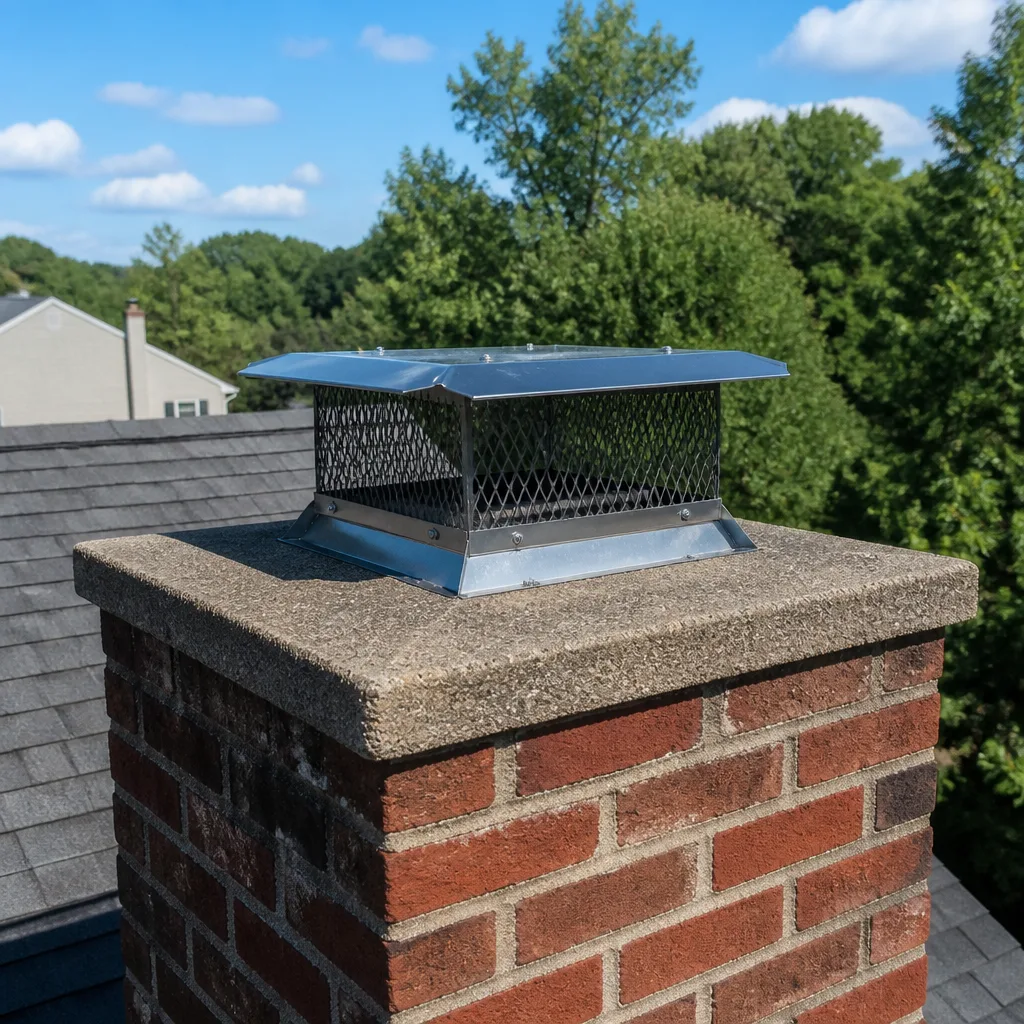 Sweep & inspection
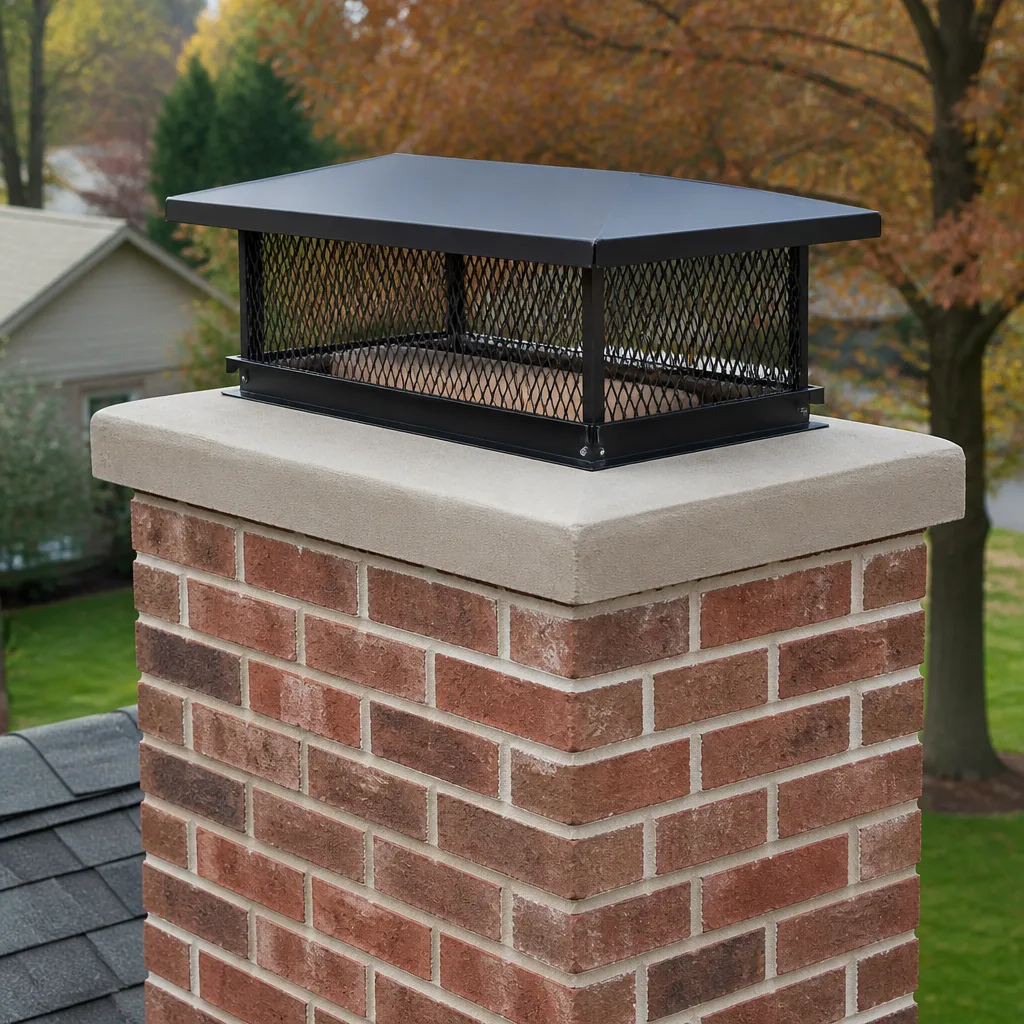 Caps & crowns
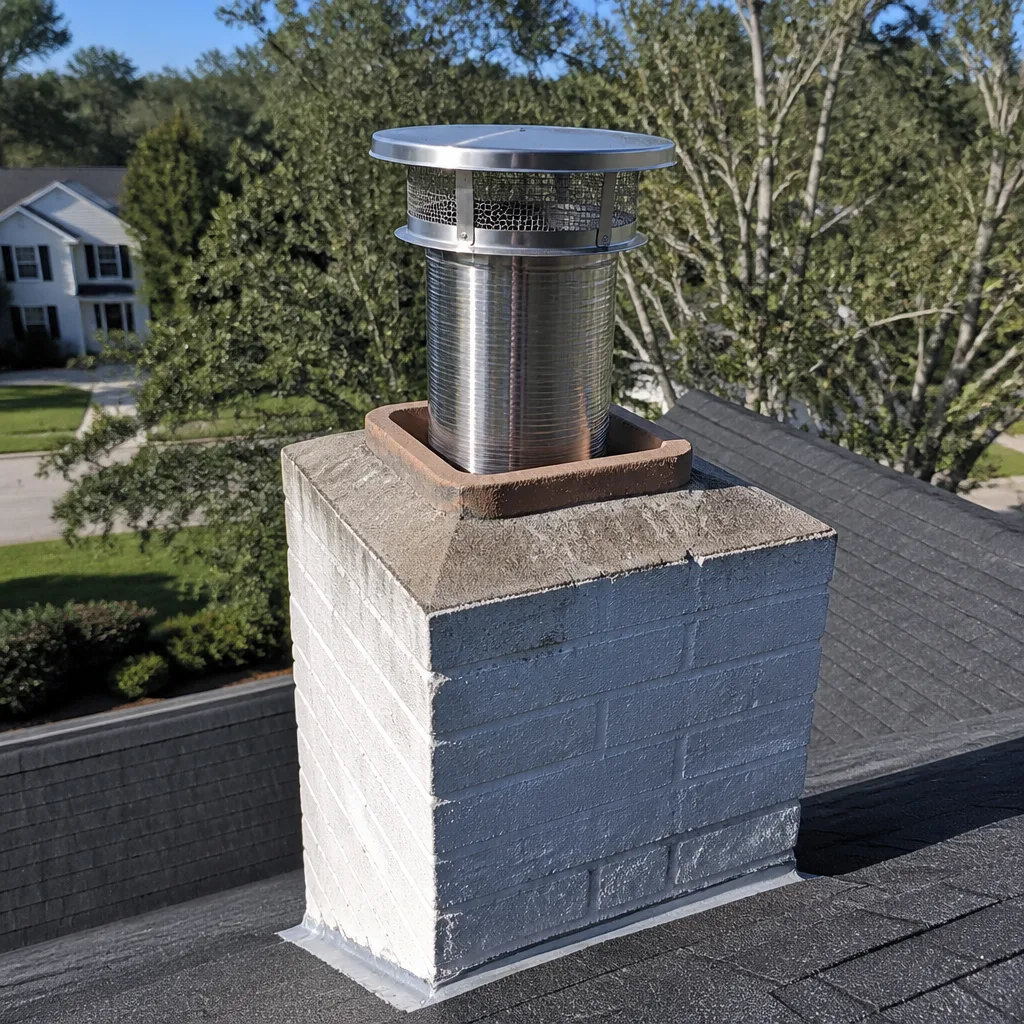 Flue relining
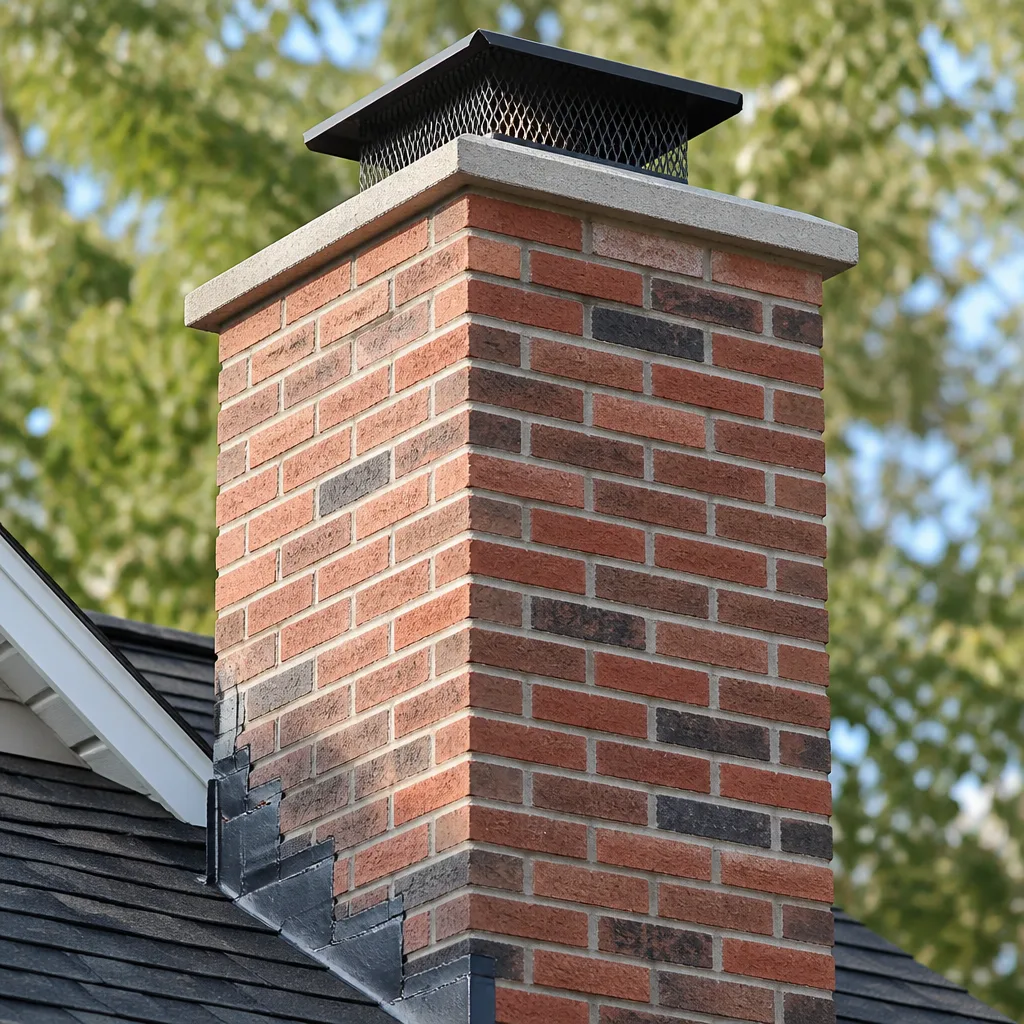 Masonry repair
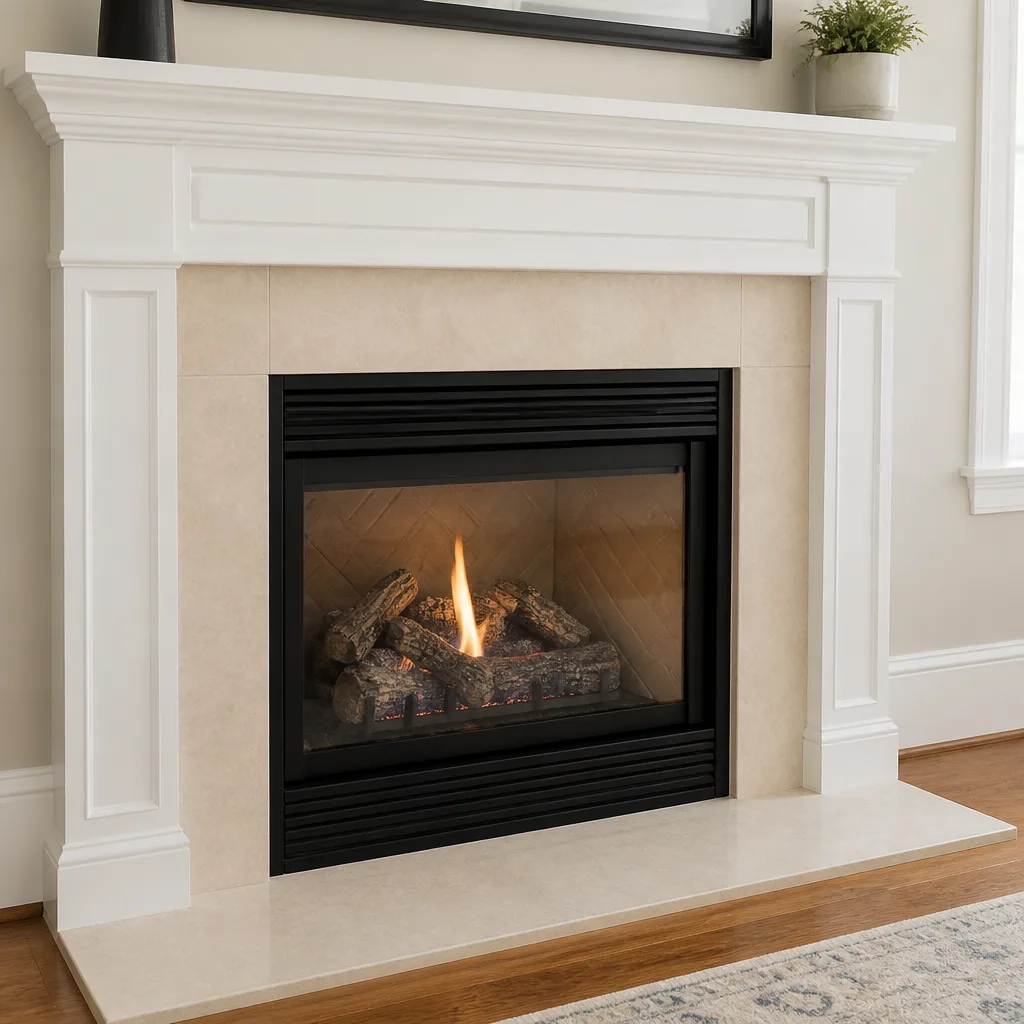 Gas fireplace service
Level 1 sweep and inspection to the NFPA 211 annual standard - flue, crown, cap, and flashing checked and photographed
Chimney sweep logs do not sweep chimneys. They loosen some creosote - which then falls where a brush and vacuum still have to collect it.
Chimney Sweep Troubleshooting in Charleston: Common Problems and How to Fix Them
A smoky firebox after a rainstorm usually isn’t a draft problem at all. Nine times out of ten, it’s a cap or crown issue letting water into the flue, and homeowners spend months chasing the wrong fix because a weak draft and a wet chimney feel identical when you’re sitting in front of the fire. The same confusion happens with odors, staining, and stubborn smoke. You treat the symptom you can see, the real cause keeps working in the background, and the repair grows. This guide walks through the problems we see most often in Charleston, how to tell them apart, and which ones you can diagnose yourself versus which ones need a camera. You’ll learn how to read your chimney instead of guessing at it.
Quick Answer
Most chimney problems in Charleston come down to three root causes: water getting in through a failing cap, crown, or flashing; creosote buildup that behaves differently depending on how often you burn; and draft issues that are usually a blockage or a pressure problem, not a design flaw. The fix depends on which one you’re actually dealing with, and the only way to know for sure is a camera inspection. A candle test at the firebox will tell you whether you have a draft problem or a blockage before you call anyone.
Styles & brands we work with
- Sweep & inspection
- Caps & crowns
- Flue relining
- Masonry repair
- Gas fireplace service
Table of Contents
- Downdraft vs. Blockage: What the Candle Test Tells You
- How Charleston Humidity Changes What Fails First
- Why Creosote Behaves Differently in Sporadic vs. Daily Burning
- Reading Staining Patterns on the Firebox and Smoke Chamber
- Cap, Crown, and Flashing Problems That Look Like Draft Issues
- Damper and Liner Condensation in Humid Months
- What You Can Diagnose Yourself vs. What Needs a Camera
- Smoke Smell in the House When the Fire Isn’t Lit
- Common Mistakes to Avoid
- When to Call a Professional
- Frequently Asked Questions
Downdraft vs. Blockage: What the Candle Test Tells You
A downdraft and a blockage both push smoke into the room, but they have completely different causes and completely different fixes. A downdraft is a pressure problem. Cold air sinks down the flue faster than the fire can warm it, usually on a still day or when another exhaust fan in the house is pulling air. A blockage is a physical obstruction: a nest, a collapsed liner tile, a cap that’s clogged with creosote, or a damper stuck shut. Homeowners in Charleston mistake the first for the second all the time, especially in older houses where a long, cold exterior chimney is common.
Here’s how to separate them before you call anyone. This is a diagnostic test, not a repair, so it’s safe:
- Open the damper fully and make sure it actually moves and stays open. A damper that sticks halfway is the most common “blockage” that isn’t one.
- Check the firebox for obvious debris, ash pileup above the grate, or a bird nest sitting on the smoke shelf.
- Light a candle and hold it just inside the firebox, below the damper. Watch the flame, don’t touch anything.
- If the flame stands straight up or leans slightly toward the flue, you have normal draft and the smoke is likely a fuel or damper issue.
- If the flame flickers or blows out toward the room, you have a pressure problem, not a blockage. A ceiling fan, a kitchen exhaust, or a bathroom fan running elsewhere in the house can cause this.
- If the flame barely moves or the smoke curls back without a strong pull, suspect a blockage and stop burning until it’s inspected.
One test won’t be conclusive on its own, but it narrows the field fast. In our experience, most Charleston homeowners who call about a “blocked chimney” turn out to have a downdraft caused by a cold flue or a house that’s tighter than the fire can handle. The rest usually have a cap or crown problem, which the next section covers.
How Charleston Humidity Changes What Fails First
Charleston’s humidity doesn’t just make summers feel worse. It changes the order in which chimney components fail. In a dry, high-desert climate, the first thing to go is usually the mortar in the crown, because of freeze-thaw and sun exposure. Here, the humidity does the work more slowly and more broadly: it softens mortar joints before they crack, keeps the firebox damper damp enough to corrode, and fills the gap between the flue liner and the masonry with condensation that has nowhere to drain.
What that looks like in practice:
- Mortar joints in the smoke chamber and the exterior stack soften before they crumble. A joint that feels sandy or comes off on your finger when you run a hand along it is on its way out, even if it looks solid.
- Damper assemblies corrode where the metal meets the brick. The hinge is the first spot to seize, and a damper that’s stuck open wastes heat and lets water down the flue.
- Liner condensation builds up on the interior face of clay tiles and on metal liner walls. Liquid water sitting against a liner shortens its life and feeds creosote, which is more corrosive when it’s wet than when it’s dry.
- Exterior masonry stacks absorb moisture on the north and east faces and hold it longer than interior chimneys ever do. This is why the top few feet of the stack usually show wear first.
The practical lesson is that Charleston chimneys tend to fail from the inside out, not the outside in. A chimney that looks clean and tight from the driveway can have softened mortar and a soggy liner behind the brick. That’s one of the reasons a straight visual check from the ground doesn’t tell you much here, and why a proper inspection includes the interior. Our technicians have up to experience reading exactly this kind of wear, and it’s why we don’t offer a sweep without an inspection attached.
Why Creosote Behaves Differently in Sporadic vs. Daily Burning
Creosote is the residue of incomplete combustion, and it forms differently depending on how you use your fireplace. A home that burns every cold night for months builds creosote slowly and evenly, mostly as a dry, flaky soot on the upper flue. A home that fires up a few times a month, or only when guests visit, builds creosote in a way that’s much worse for the chimney. That’s the pattern we see most often in Charleston, where wood fires are seasonal and often social rather than the primary heat source.
Here’s the difference, and it matters for how the sweep goes:
- Daily burning keeps the flue warm for long stretches. Creosote deposits come off easily with a standard brush, and the buildup is usually predictable.
- Sporadic burning produces short, cool fires followed by long cold periods where condensation sits on the liner. That combination creates glazed or hard creosote, the kind that doesn’t brush off and needs a rotary sweep or a chemical treatment.
- Green or unseasoned wood in a sporadic-use fireplace is the worst combination, because the moisture in the wood keeps the fire cooler and deposits more than it burns off.
What this means for scheduling: a chimney in a sporadically used home can build up glazed creosote faster than you’d expect from the number of fires. If you burn a few times a month, get on an annual inspection and sweep schedule anyway. If you suspect glazed creosote, tell the sweep company when you book, because a rotary sweep takes longer and isn’t a same-day walk-in job. If the sweep finds a liner problem underneath, the same company should be able to move into chimney repair without a second appointment, which is how we handle it.
Reading Staining Patterns on the Firebox and Smoke Chamber
Staining on the firebox and smoke chamber is a diagnostic map, not just cosmetic wear. Every pattern tells you where water, smoke, or heat is escaping, and reading it correctly can save you from a repair you don’t need or show you a repair you’re about to need.
- White, chalky bloom on brick is efflorescence, and it means moisture is moving through the masonry and evaporating on the surface. It’s usually a sign of a crown or flashing problem above.
- Dark soot streaks rising from the top of the firebox opening indicate smoke escaping into the room during the first few minutes of a fire. That’s a downdraft or a flue that’s too cold, not a blockage.
- Brown tide-line stains around the smoke chamber mean water is entering above and running down. Look at the cap and crown, not the firebox.
- Rust streaks on the damper or firebox frame confirm standing moisture. A rusted damper is failing, even if it still moves.
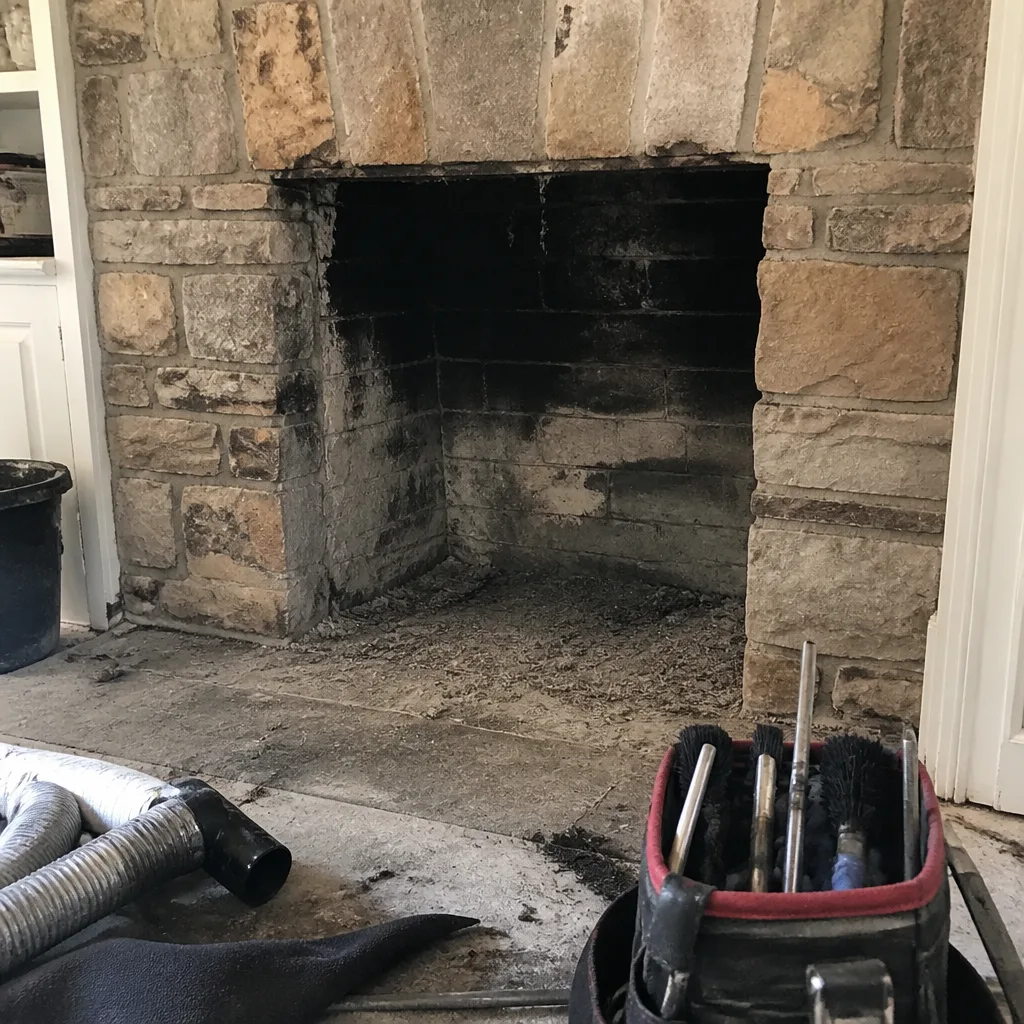
- Uniform black coating all the way up the smoke chamber is normal creosote and soot from use. It’s cosmetic and comes off in a sweep.
In our experience, Charleston homeowners read the black coating and assume it’s the problem, when the white bloom and the tide-line stains are what actually point at the failure. Tape a photo of the staining on your phone and show it to the sweep. It helps narrow the inspection focus. For more on what a proper inspection covers, see our chimney sweep page, which walks through what we check and why.
Cap, Crown, and Flashing Problems That Look Like Draft Issues
A smoky fire after a heavy Charleston rain is almost always one of three problems: a missing or damaged cap, a cracked crown, or failed flashing at the roof penetration. All three let water in, and all three can mimic a draft problem because wet wood and a wet flue burn colder and smoke more. The confusing part is that a cap problem makes the fire smoke, so the homeowner assumes the chimney doesn’t draw. It does. It’s just wet.
The three parts fail in different ways:
- The cap sits on top and keeps out rain, birds, and debris. A rusted-through cap, a cap with a broken screen, or a cap that’s missing entirely lets water straight into the flue. Birds nest inside open flues with shocking regularity, and a partially blocked flue with a nest inside is a fire risk, not just a nuisance.
- The crown is the concrete or mortar surface at the very top of the stack. Small cracks open up with thermal cycling, and once water gets in under the crown, it works down behind the flue tiles. A crown that’s cracked but still in one piece can be resurfaced; one that’s crumbling needs to be rebuilt.
- The flashing is the metal seal where the chimney meets the roof. Failed flashing lets water travel down the masonry and show up as a stain on the ceiling, which homeowners often blame on the roof rather than the chimney.
For cap replacement, we use Gelco caps and Copperfield components because they hold up to the humidity swings we get here better than the stamped-steel caps sold at hardware stores. That’s not a sales pitch. It’s just the difference between a cap that lasts and one that’s rusted through in a few seasons. When the crown needs resurfacing, a HeatShield application lets us restore the surface instead of rebuilding it from scratch. Nothing gets recommended without camera or roof-level evidence you can look at yourself, and if the damage is minor enough to monitor for a season, we’ll tell you that too.
Damper and Liner Condensation in Humid Months
Damper corrosion and liner condensation are the two problems Charleston homeowners underestimate most, because neither shows up as a dramatic failure. Both are slow, both are made worse by humidity, and both get expensive only when ignored long enough to spread.
Here’s what’s actually happening:
- The damper is a steel plate at the top of the firebox. Its hinge and frame sit right where moisture from a fire mixes with moisture from the air, and the steel rusts at the hinge first. A damper that sticks half-open lets heat out year-round and lets cool, damp air down the flue in the off-season, which then condenses on the liner.
- Liner condensation happens because a metal or clay liner cools faster than the surrounding masonry. On a humid Charleston evening, warm air rising up a cool flue deposits moisture on the liner wall, and that moisture mixes with any creosote present to form a mildly corrosive film. Over enough seasons, the film begins to pit the metal liner or soften the clay tile joints.
The symptoms are subtle: a slight creosote smell in the house even when the fireplace is cold, a fire that’s harder to light than it used to be, or a gummy residue visible on the inside of the flue. Any of those is a reason to get the liner checked. A HeatShield resurfacing can restore a clay liner that’s still structurally sound, and DuraFlex flexible liners handle the cases where the original tile is beyond resurfacing. What we won’t do is recommend a new liner unless we can show you the camera footage of why. If your liner needs another few years, we’ll say so and tell you what to watch.
What You Can Diagnose Yourself vs. What Needs a Camera
Some chimney symptoms are safe to check yourself. Others need a camera, and guessing at those is how small problems become expensive ones. The dividing line is simple: anything you can see from the firebox without opening the flue is fair game. Anything above or behind the damper needs eyes that can see around a bend.
You can check these yourself, safely:
- Whether the damper moves fully and stays open.
- Whether the firebox has visible debris, ash pileup, or a nest sitting on the smoke shelf.
- Whether the fire smokes consistently at the start of a fire or only in certain weather.
- Whether the outside of the stack has cracks, missing mortar, or a rusted-through cap you can see from the ground.
- Whether there’s a staining pattern you can photograph.
These need a camera inspection:
- Any suspected liner damage, softening, or glazed creosote.
- Any creosote smell in the house when the fire is cold.
- Any “blocked chimney” symptoms the candle test didn’t resolve.
- Any staining that suggests water entering above the smoke chamber.
The reason is that a flue isn’t a straight pipe. It offsets, it turns, and it has a smoke shelf that catches debris. A camera inspection sees past all of that, and the photo report is your verification that the recommendation is real. We always include a camera inspection and a photo report with an inspection; you see the footage, and nothing gets recommended that the footage doesn’t show. If you’re not sure which category a symptom falls into, call and describe it. We can tell you whether it needs a visit or whether you can safely investigate further yourself.
Smoke Smell in the House When the Fire Isn’t Lit
A cold fireplace that smells like smoke is one of the most common complaints we get in Charleston, and it’s almost never an active leak. What you’re smelling is the creosote residue in the flue reaching a temperature or humidity level that lifts the smell off the liner and into the house. It’s strongest in humid weather, when the fire isn’t lit, and after a rain, which is why homeowners think it’s the rain. It’s the liner.
The reasons line up in a predictable order:
- Buildup in the flue from sporadic burning, which is the most common cause in Charleston homes.
- Negative pressure in the house pulling air back down the flue. Running a kitchen exhaust, an attic fan, or a clothes dryer can do this, and so can a tightly sealed house.
- A dirty firebox or a full ash pit, which smells until it’s cleaned out.
- A damaged or missing cap, which lets water in and keeps the creosote wet enough to lift off the liner.
- Water in the flue from a failing crown or flashing, usually visible as a stain.
A sweep usually solves the smell completely, and if the smell comes back before the next season, the camera inspection usually finds the reason. The fix is almost never “light a fire to clear it out.” Burning a small fire in a smelly chimney just adds more creosote to the problem.
Common Mistakes to Avoid
- Assuming smoke means a draft problem. A smoky firebox after rain is more often water getting in through the cap or crown. Burning through it adds more creosote to a wet flue, which is the opposite of a fix.
- Burning green or unseasoned wood because it’s what’s on hand. In Charleston’s humid climate, wood that’s been stored uncovered outside rarely seasons properly. It burns cold, deposits sticky creosote, and makes a sporadic-burning fireplace worse.
- Ignoring the white bloom on the brick. Efflorescence is a visual indicator that moisture is moving through the masonry. Homeowners clean it off and forget it; it always comes back until the source is fixed.
- Chimney sweeping only when there’s a problem. A chimney can build up dangerous creosote long before it smokes visibly. Annual inspection is the only reliable way to know.
- Assuming a hardware-store cap fits properly. A cap that’s slightly too small or too large for the crown lets rain in around the base, and it’s the most common reason a new cap doesn’t solve the water problem. Professional-grade caps (Gelco, Copperfield) are sized to the actual flue opening.
- Hiring separate companies for the sweep and the repair. A sweep that also does repair can act on what it finds the same day; a sweep-only company has to hand the job to a second contractor, and the diagnosis gets lost in the handoff. Single-source accountability matters here.
- Burning in a chimney that hasn’t been inspected. A chimney doesn’t have to have visible damage to be unsafe. If the flue has softened mortar or a partially collapsed liner, the first fire is the risk, not the last.
When to Call a Professional
Call for an inspection if any of the following is true: you haven’t had the chimney inspected in over a year; you smell smoke in the house when the fire isn’t lit; you see white staining or brown tide-line marks on the firebox or smoke chamber; the damper sticks or doesn’t close fully; the cap is missing or visibly damaged from the ground; you’ve had a chimney fire (even a small one, and even if you’re not sure); or the fire smokes consistently no matter what you do. Call for a sweep before the burn season begins if you’ve been burning sporadically and want to know what’s in the flue. Charleston Chimney Cleaning offers free estimates in Charleston. Our technicians have up to experience, and we work with professional-grade components from Copperfield, DuraFlex, HeatShield, and Gelco so a repair found in a sweep can often be done on the same visit. Call (866) 864-1983. We answer 24/7. Fast dispatch from 7am to 7pm, Sunday through Friday.
Frequently Asked Questions
A downdraft makes the candle flame flicker or blow toward the room; a blockage makes it barely move. Do the candle test with the damper open and turn off any exhaust fans first. If the flame stands up or pulls toward the flue, you have draft. If it can’t pull at all and the smoke curls back, suspect a blockage and stop burning until it’s inspected. Call (866) 864-1983 for a camera inspection, which is the only way to confirm a blockage above the damper.
The smell is coming from creosote residue in the flue lifting off the liner, usually in humid weather. It’s strongest in sporadically used fireplaces because the buildup sits on the liner longer without a hot fire to burn it off. A sweep usually solves it completely. If the smell returns within a season, a camera inspection will find the reason, which is usually a wet flue from a failing cap or crown. Call us to book a sweep before you burn again.
Most sweeps in Charleston fall in the typical range of $175 to $350 for a standard flue, with glazed creosote or a rotary sweep pushing toward the higher end. The written estimate sets the final price, and the estimate itself is free. If the sweep uncovers a repair, you’ll get a separate written estimate before any work starts. Call (866) 864-1983 for an exact quote.
You need a new or resurfaced liner only if a camera inspection shows the existing liner is damaged, pitted, or has softened joints. Homeowners are often told a liner replacement is unavoidable when the original can still be restored with a HeatShield application or a DuraFlex flexible liner. Nothing gets recommended without camera evidence you can see for yourself. If a clay liner has a few good years left, we’ll tell you what to watch and when to check back. Call for a free estimate.
Once a year for any actively used fireplace, and once a year even for a sporadically used one. The sporadic case matters more in Charleston, because humid off-season air plus short cool fires creates glazed creosote faster than steady burning does. An annual inspection catches buildup, cap damage, and liner condensation before they turn into repairs. Call (866) 864-1983 to schedule.
The creosote keeps building up and the risk of a chimney fire climbs with it. Skip long enough and the flue can soften, the mortar in the smoke chamber can crumble, and water from a failing cap or crown can do damage that costs far more to fix than a sweep would have. The odor, the smoke, and the staining are signs that the problem is already underway. Call for a free estimate and let a camera inspection tell you what’s actually going on inside the flue.
The Bottom Line
Most chimney problems in Charleston follow a predictable path: water finds a way in through a cap, crown, or flashing, the wet liner grows glazed creosote, and the fire starts smoking or the house starts smelling. Once you can tell a downdraft from a blockage and read the staining patterns for what they are, you can narrow the diagnosis before you call anyone. What you can’t do from the firebox is see the flue. That’s where a camera inspection earns its keep, and it’s also the reason you should never accept a liner replacement on the word of someone who won’t show you the footage. When you’re ready for an honest diagnosis and a repair from the same company that sweeps, Charleston Chimney Cleaning is how we work. Call (866) 864-1983 for a free estimate. We answer 24/7. Fast dispatch from 7am to 7pm, Sunday through Friday. The Charleston area’s fireplaces deserve a chimney system treated as a system, not a series of isolated tasks.
Written by the team at Charleston Chimney Cleaning.
See the difference
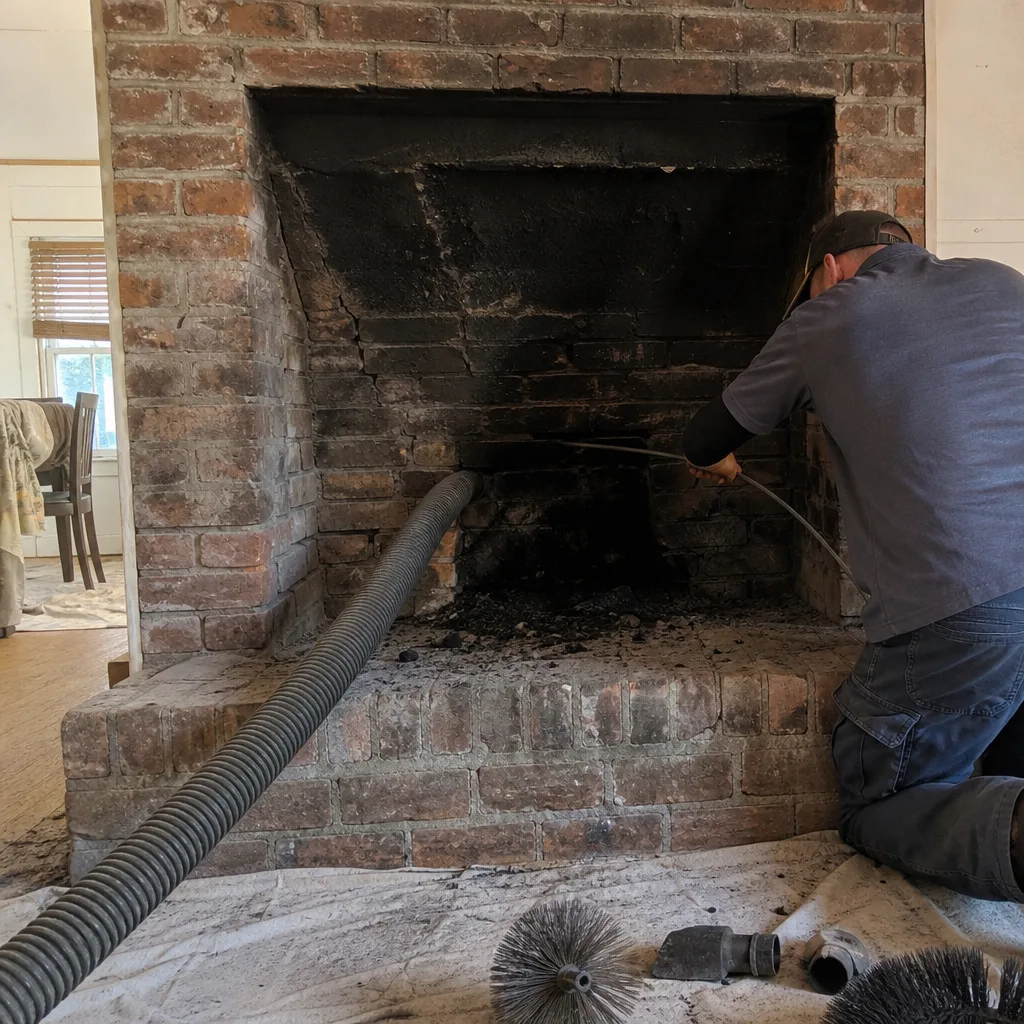 Before
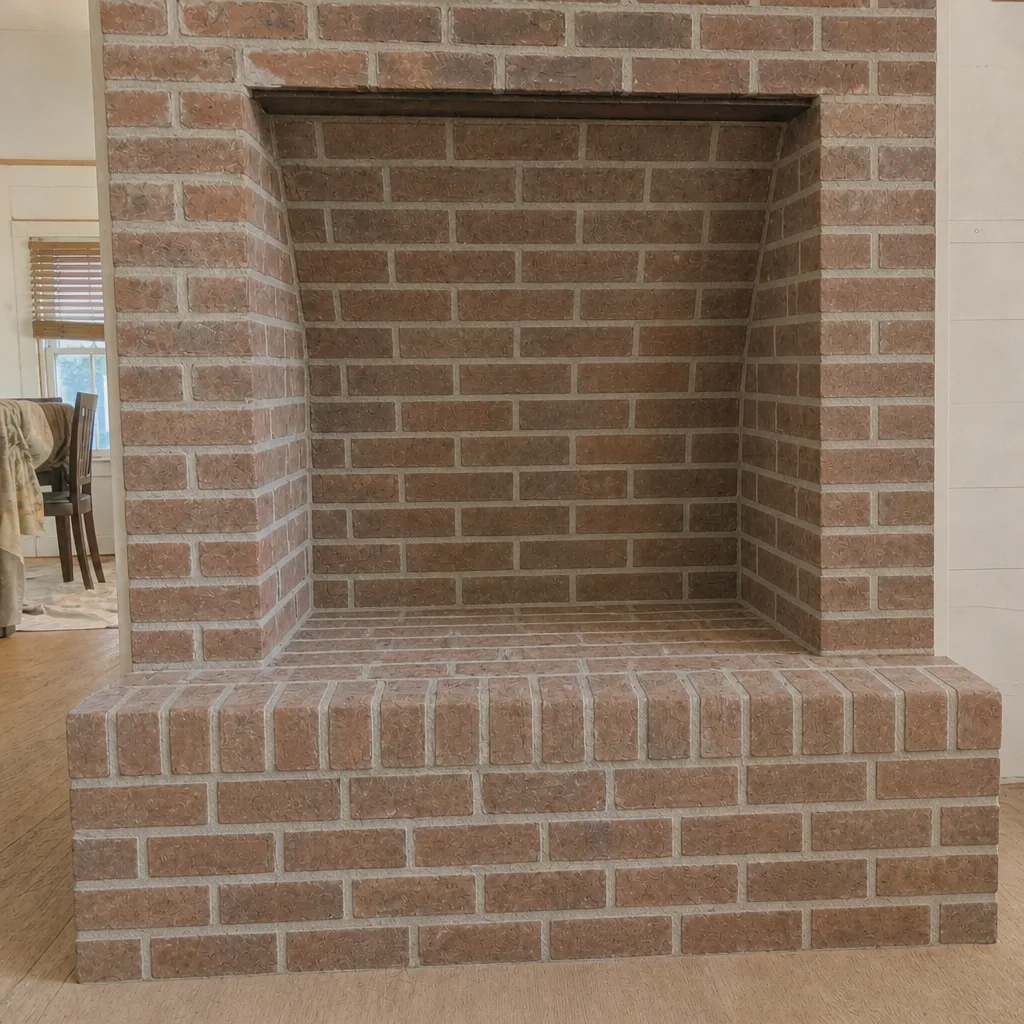 After
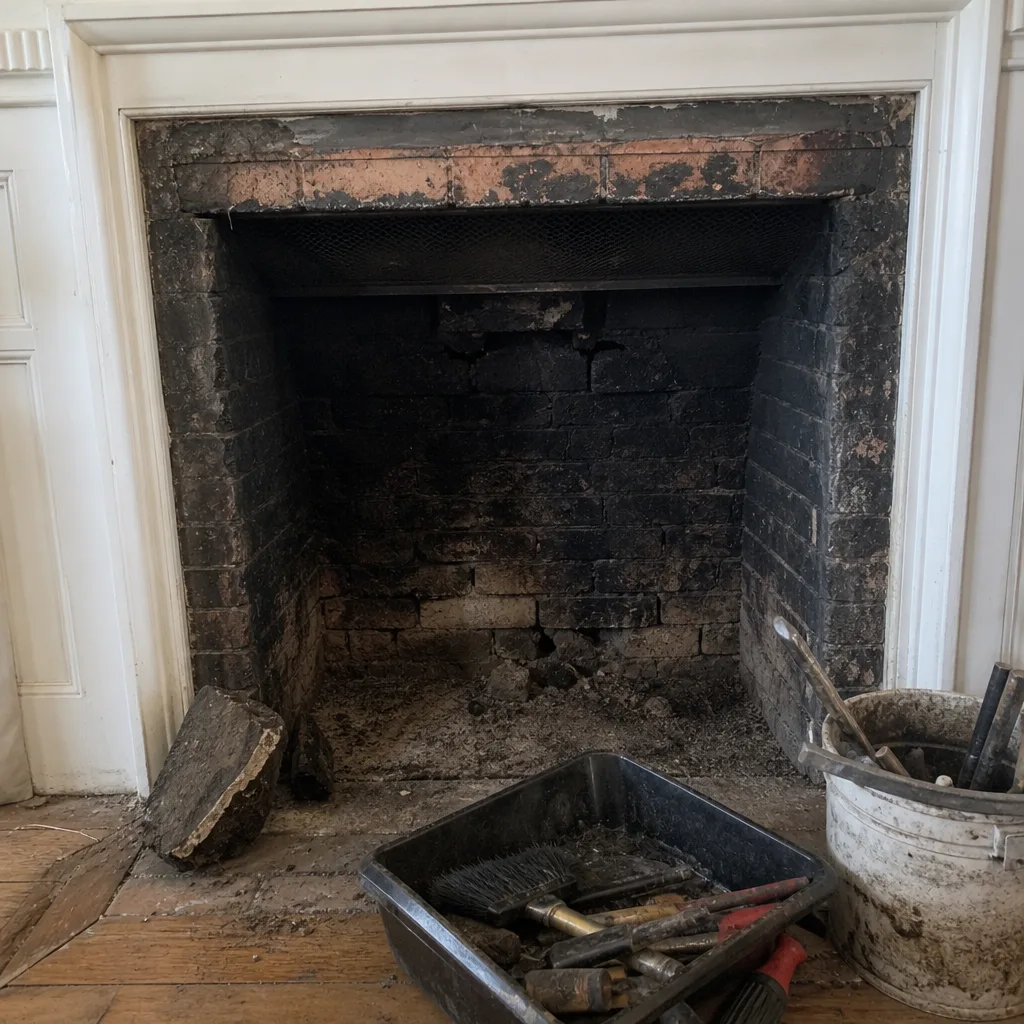 Before
 After
 Before
 After