
Last updated November 15, 2026
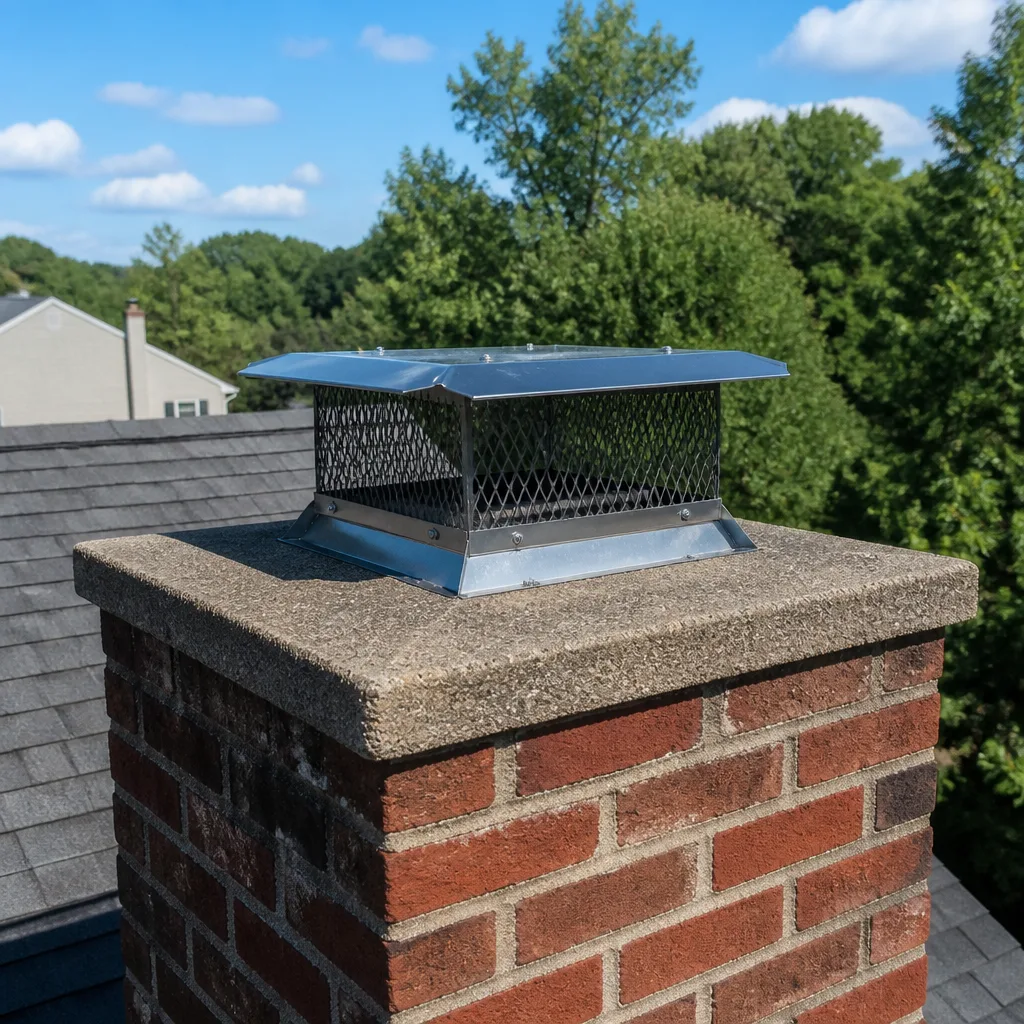 Sweep & inspection
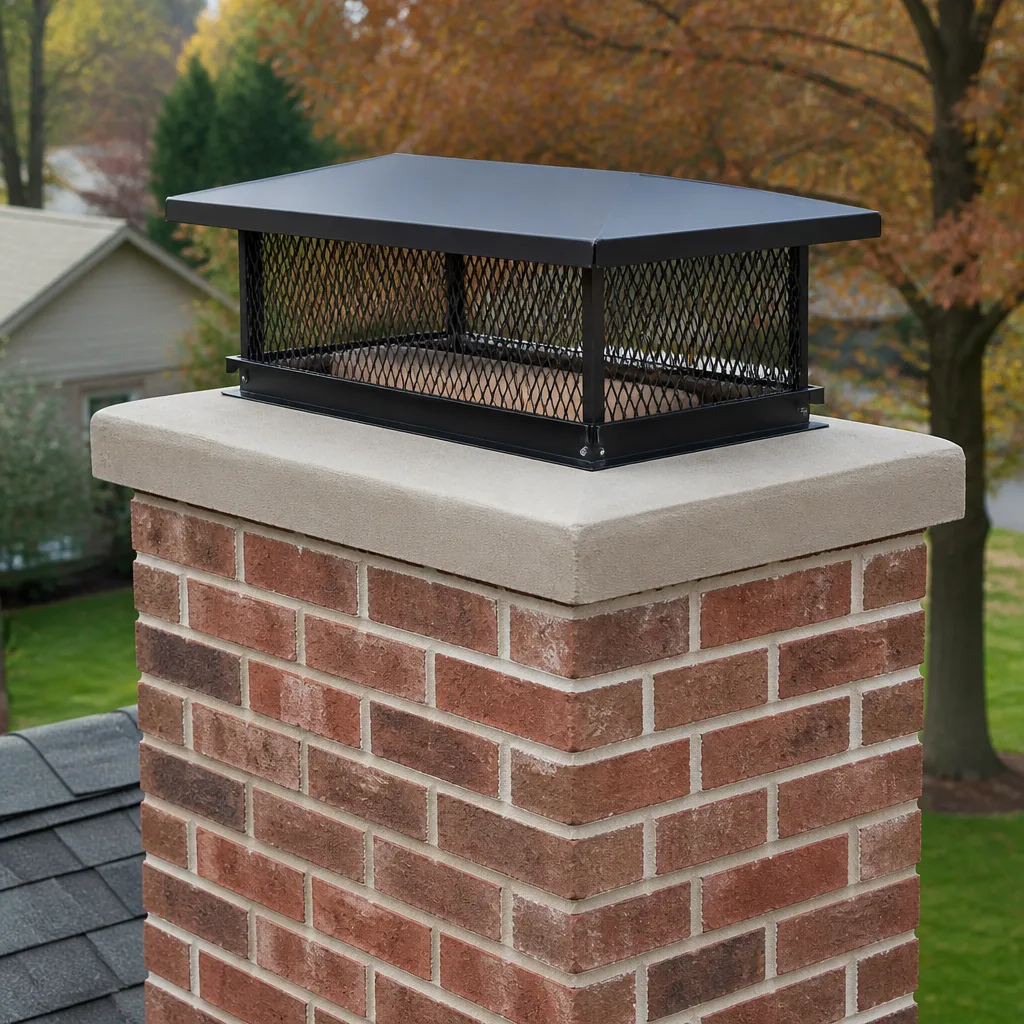 Caps & crowns
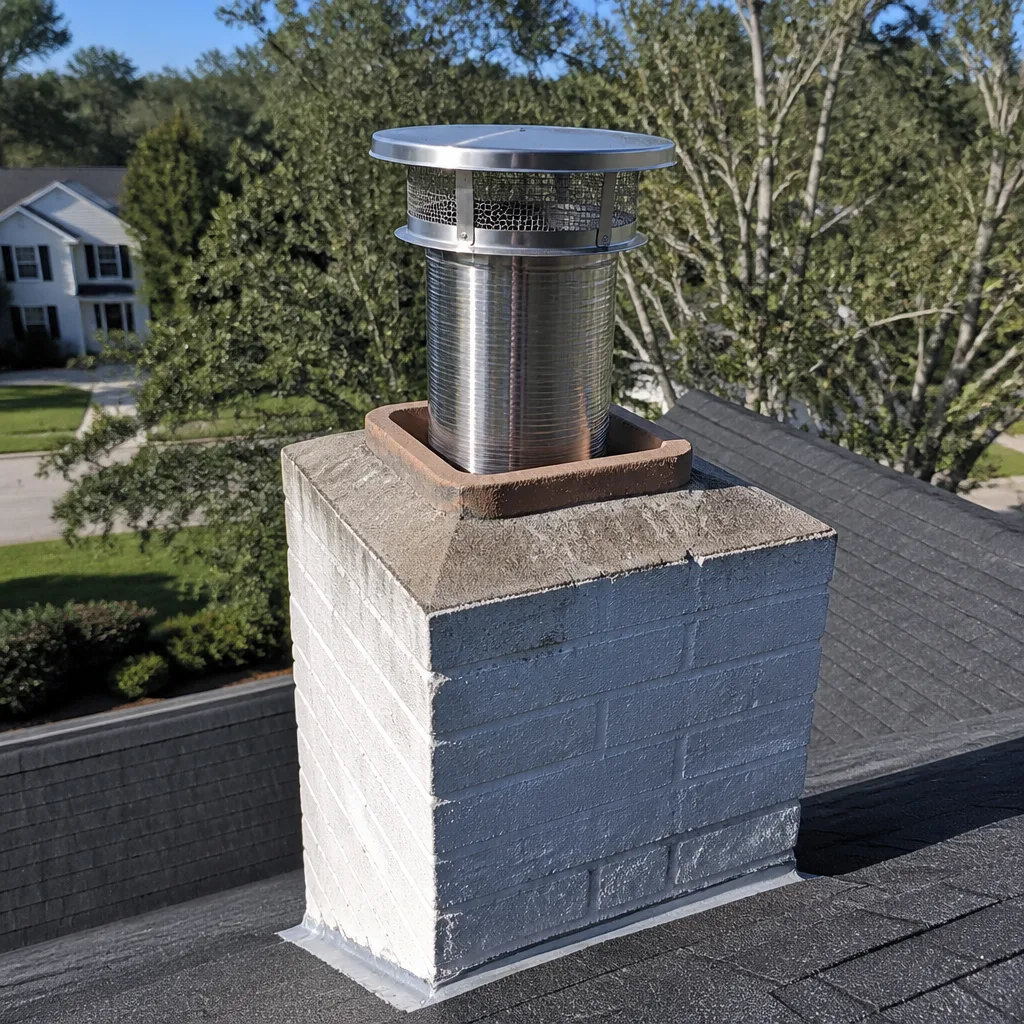 Flue relining
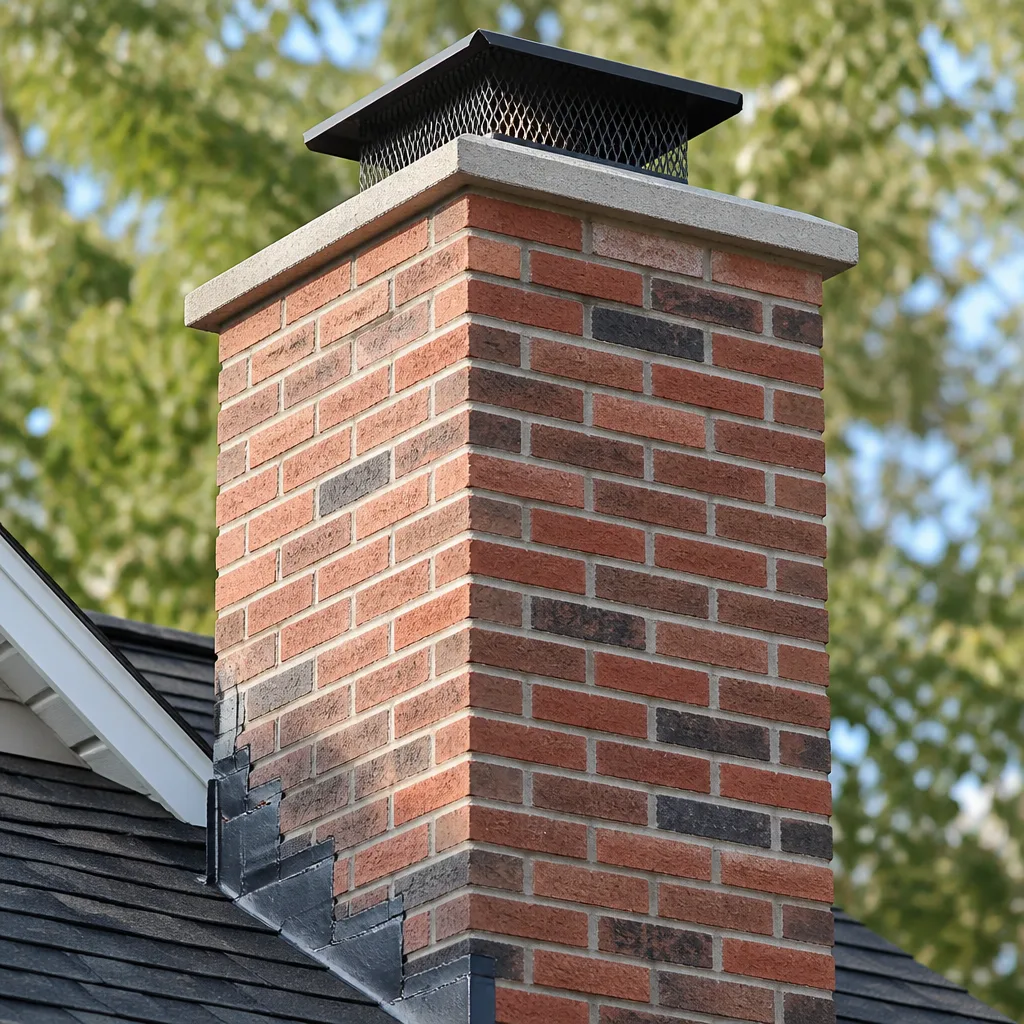 Masonry repair
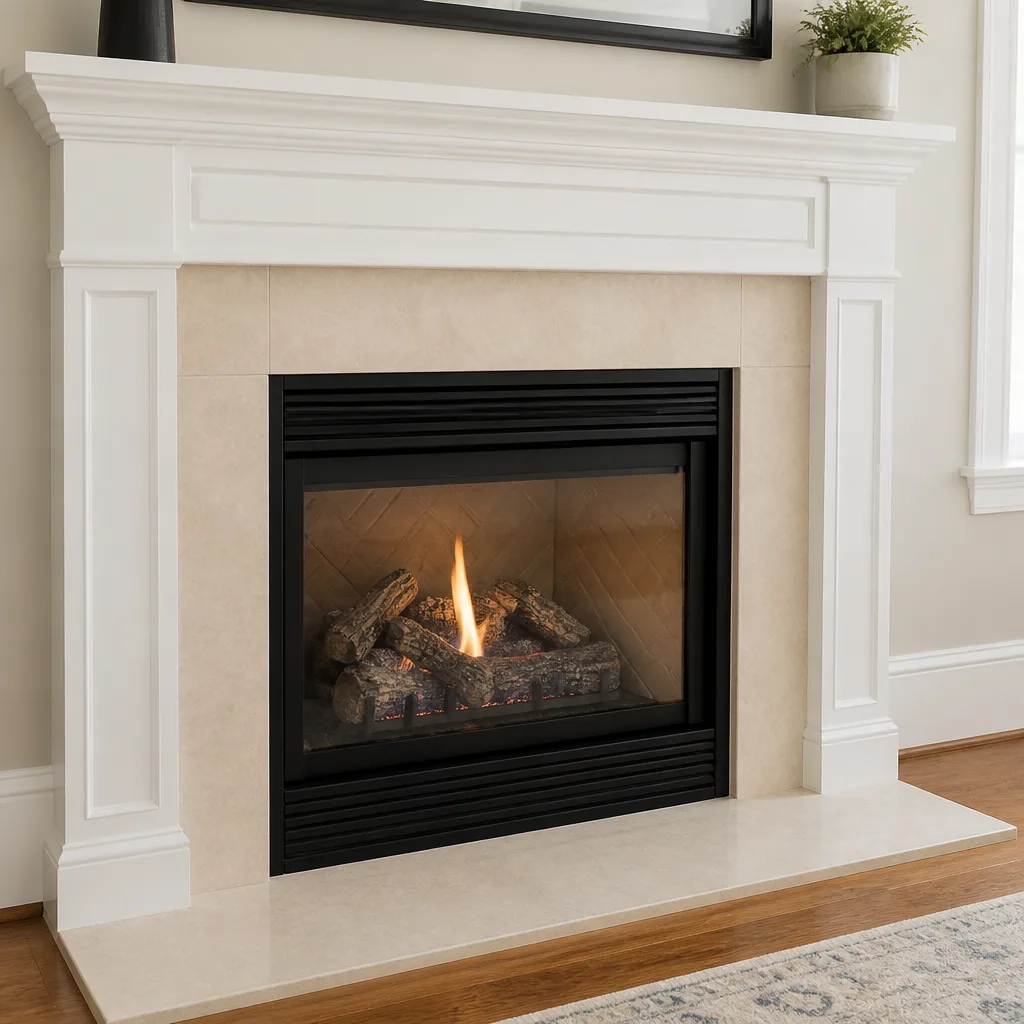 Gas fireplace service
Level 1 sweep and inspection to the NFPA 211 annual standard - flue, crown, cap, and flashing checked and photographed
Chimney sweep logs do not sweep chimneys. They loosen some creosote - which then falls where a brush and vacuum still have to collect it.
The Complete Guide to Chimney Cleaning in Charleston
Most chimney fires in Charleston don’t start after a long winter of heavy burning. They start after a light one. A fireplace used a dozen times a season, in a house that stays closed and humid for months, builds creosote that hardens differently than the soot a heavy-burning household produces. Homeowners assume low use means low risk, and that assumption is behind a lot of the damage we find in Charleston homes. In this guide we’ll walk through how the local climate changes what your chimney needs, how the three inspection levels work, what a proper cleaning actually involves in older Charleston housing stock, and the mistakes that cost homeowners the most.
Quick Answer
Chimney cleaning in Charleston means removing creosote, soot, and debris from the flue, then inspecting the full venting system for the moisture damage and cracked masonry that the local climate accelerates. Most wood-burning fireplaces need a sweep and a Level 1 or Level 2 inspection roughly once a year, though the right interval depends on how often you burn and what the inspection finds. A proper visit always includes a camera inspection with a report you can see for yourself, not just a brushing and a bill.
Styles & brands we work with
- Sweep & inspection
- Caps & crowns
- Flue relining
- Masonry repair
- Gas fireplace service
Table of Contents
- Why Charleston’s Climate Changes Chimney Care
- Why Low-Use Fireplaces Still Build Dangerous Creosote
- Level 1, 2, and 3 Inspections: Which Does Your Charleston Home Need?
- What Older Charleston Brick Chimneys Require
- What Happens During a Professional Sweep
- Why Certification Matters More Than a General Contractor’s License
- How Often Should You Schedule Cleaning?
- What Affects the Cost of Chimney Cleaning
Why Charleston’s Climate Changes Chimney Care
Charleston’s humidity does more slow damage to a chimney than any other single factor. Masonry is porous, and in a climate where the air stays warm and moist through much of the year, brick and mortar absorb moisture and hold it. That moisture expands and contracts with temperature swings, and over time it erodes mortar joints and opens hairline cracks in the flue. Once water is getting in, a second problem follows: the creosote lining the flue absorbs that moisture too, which changes how it hardens and makes it harder to remove with a standard brush.
The mild winters matter just as much. In colder regions, the freeze-thaw cycle is the main driver of masonry damage. In Charleston, the bigger issue is sustained damp. Chimneys here don’t dry out the way inland chimneys do. A flue that stays humid becomes a better environment for the acidic byproducts of combustion to sit against the liner, and that shortens liner life. When we open up a Charleston chimney that hasn’t been serviced in several years, what we often find is rusted or deteriorated liner components alongside the creosote, not just the creosote alone.
This is why your chimney has to be treated as a system rather than a tube. The cap, the crown, the flashing where the chimney meets the roof, the flue liner, and the firebox all interact. A missing or damaged cap lets rain straight down the flue. A cracked crown lets water into the masonry from the top. We stock Gelco chimney caps because replacing a failed cap is one of the simplest ways to stop the moisture problem at the source, and we don’t want to diagnose a problem and leave you to hunt down the part on your own.
Practically speaking, this means a Charleston homeowner should think about the exterior of the chimney at least as much as the firebox. A chimney that looks fine from the living room can have a crown that’s cracked and a cap that’s rusted through. Those are the entry points for everything the climate throws at it.
Why Low-Use Fireplaces Still Build Dangerous Creosote
A fireplace used ten times a season can build creosote that’s just as hazardous as one used every night, and sometimes more so. Creosote forms in stages. Stage 1 is loose soot and flaky residue that brushes away easily. Stage 2 is a denser, hardened deposit that clings to the flue wall. Stage 3 is a glazed, tar-like coating that’s genuinely difficult to remove and is the most flammable stage. The jump from Stage 1 to Stage 2 to Stage 3 isn’t just about how much wood you burn. It’s about how the fire burns and what happens between fires.
In Charleston’s mild winters, a lot of fireplaces get lit for a few cool evenings, then sit unused. Each short burn cycle deposits a fresh layer of creosote. Between burns, the flue stays damp and doesn’t get a hot, sustained fire to dry it out and burn off the loose deposits. So the creosote that does form has time to set and harden before the next fire. That’s how a lightly used Charleston fireplace ends up with Stage 2 deposits after a few seasons.
Three things push creosote buildup faster:
- Burning unseasoned wood. Green or wet wood produces more smoke and more creosote. Wood that’s properly dried burns hotter and cleaner.
- Smoldering, low-oxygen fires. A fire starved of air smolders instead of burning hot, and smoldering fires are creosote factories.
- Short burn cycles. Lighting a fire for an hour and letting it die produces deposits without the sustained heat that keeps them loose.
If you burn occasionally in Charleston, don’t skip the annual sweep because you think you haven’t burned enough to matter. The deposits are there. Our technicians have up to experience reading exactly this pattern, and it’s one of the most common things a chimney sweep visit uncovers in local homes.
Level 1, 2, and 3 Inspections: Which Does Your Charleston Home Need?
The three inspection levels answer different questions. A Level 1 is a visual check of the readily accessible parts of the chimney and venting system, done without special tools. A Level 2 adds a camera inspection of the flue interior and covers areas that aren’t readily accessible. A Level 3 goes further and involves opening up parts of the structure to get at hidden areas, and it’s only warranted when a serious problem is suspected in a concealed location.
Here’s how they break down:
- Level 1: For an appliance that’s been serviced regularly with no changes to the system and no known problems. Visual check of the accessible parts. This is the minimum for a routine annual visit.
- Level 2: Required when the appliance or venting system has changed, after a chimney fire or other event, when you’ve moved into a new home, or when a Level 1 turns up something that needs a closer look. This is the one that includes a camera inspection of the flue.
- Level 3: Reserved for a suspected problem in a concealed area that can’t be reached by camera. Involves opening walls or other building components. This is rare, and it should follow a documented reason, not a guess.
For Charleston homeowners, the Level 2 is the one that matters most after a storm season. Wind-driven rain, falling limbs, and debris can damage a cap, crack a crown, or drop material down the flue. None of that shows up in a Level 1. If you’ve had a storm come through and your chimney hasn’t been looked at since, a Level 2 with a camera inspection tells you what actually happened inside the flue. It’s also the right call when you’ve just bought a Charleston house, because you have no service history to rely on.
We always include a camera inspection and a photo report so you can see what we see. If a chimney repair is recommended, it’s because the camera shows a reason, not because somebody glanced at the firebox and guessed.
What Older Charleston Brick Chimneys Require
Charleston has a substantial share of homes built before 1980, and older brick chimneys need a different approach than newer construction. The brick in an older chimney was laid with mortar that has had decades to weather. In this climate, that mortar is often soft, eroded, or missing in places, and the flue itself may be unlined or lined with a material that wasn’t designed for modern combustion temperatures. A cleaning on an older chimney isn’t just about removing creosote. It’s about checking whether the flue is safe to use at all.
What changes on an older Charleston brick chimney:
- Mortar condition matters as much as the flue. Soft or crumbling mortar allows moisture penetration and weakens the structure. It also can let combustion gases escape where they shouldn’t.
- Unlined or clay-tile-lined flues need close scrutiny. A cracked clay tile is a pathway for heat and gases into the surrounding masonry.
- Oversized flues are common. Older fireplaces were often built with flues larger than the appliance needs, which makes the fire draft poorly and builds creosote faster.
- Prior repairs may not be visible. A flue that’s been patched without documentation needs a camera inspection before anyone assumes it’s sound.
When an older flue has cracks or a deteriorated lining, brushing it clean is only half the job. That’s where liner restoration comes in. We work with HeatShield for liner resurfacing and DuraFlex for flexible relining, which means an older Charleston chimney can be brought back to safe working condition without tearing the structure apart. Industry-trusted brands, properly installed, are the difference between a repair that holds and one that has to be redone.
The main takeaway for older Charleston homes: a proper cleaning includes an honest assessment of the masonry and the liner, and if the flue isn’t sound, you need to know that before you light another fire.
What Happens During a Professional Sweep
A professional sweep follows a sequence, and understanding it helps you know what to expect. It’s not a quick brush-and-go. It starts with protecting your home, moves through cleaning and inspection, and ends with a report you can act on.
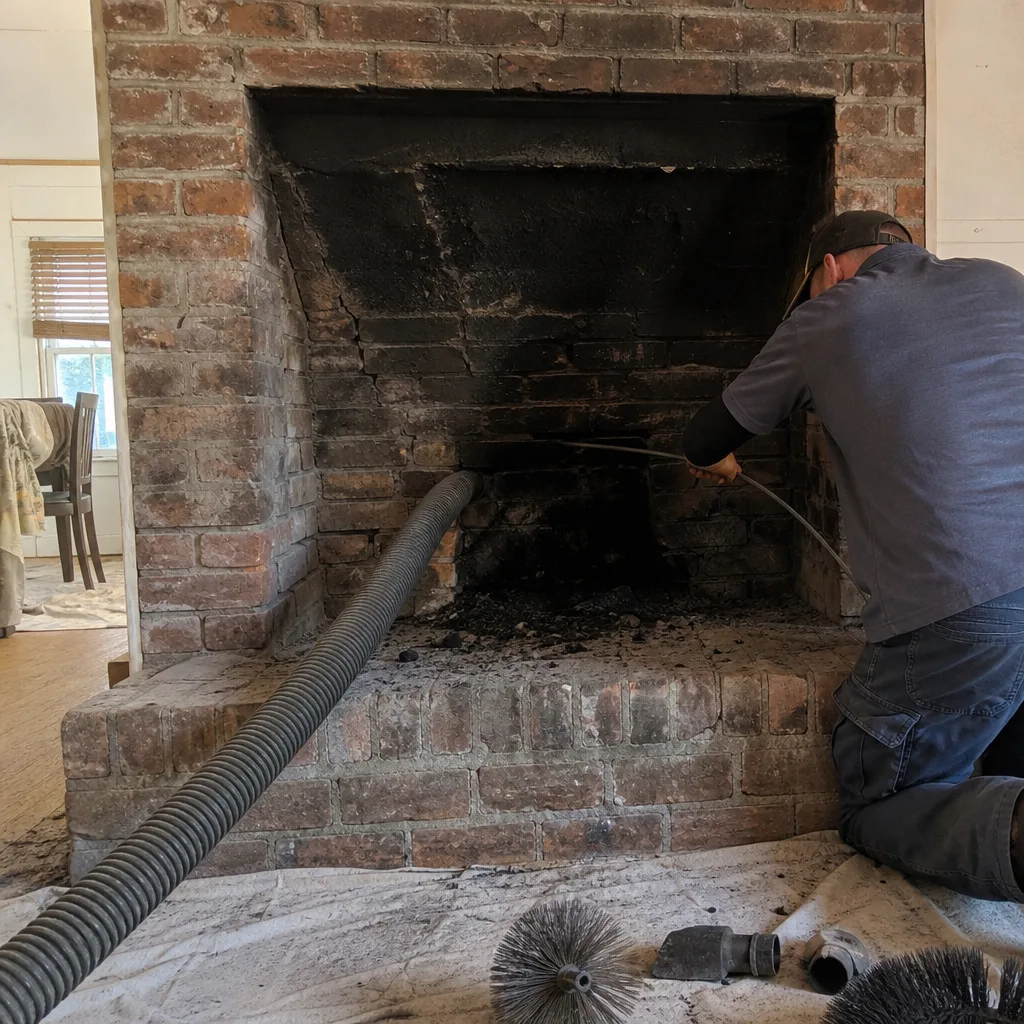
- Set up and protect the work area. Drop cloths go down around the hearth, and a dust-containment system keeps soot out of the room.
- Clear the firebox and damper area. Ash and debris are removed before the flue cleaning begins.
- Brush the flue. The right brush for the flue’s size and material is run through the full length to remove creosote and soot.
- Inspect with a camera. With the flue clean, a camera inspection shows the condition of the liner, joints, and any damage that deposits may have been hiding.
- Check the accessible components. The cap, crown, flashing, and firebox are checked for the moisture damage and wear the Charleston climate drives.
- Provide a report and a written estimate. If repairs are needed, you get a photo report and a written estimate. If the chimney is fine, you’re told that too.
The point of finishing with a camera inspection is that cleaning and diagnosis happen in one visit. If a repair is needed, the same company that found the problem can carry it out. From sweep to repair, one call covers it, and you’re not left coordinating a second contractor who has to start from scratch. We inspect it, we fix it, and the accountability stays in one place. If you want to see what a visit looks like from start to finish, the team at Charleston Chimney Cleaning walks through it in detail, and you can book a sweep and inspection together.
Why Certification Matters More Than a General Contractor’s License
Chimney work is a specialty, and a general contractor’s license doesn’t cover it. A general contractor may hold a valid license and still never have inspected a flue interior, evaluated a liner, or understood what a given creosote stage means for fire risk. Certification from a chimney trade body is the credential that’s actually relevant to this work, because it requires training and testing specific to chimney and venting systems.
What to look for when you hire in Charleston:
- Trade-specific certification. Ask whether the technician holds certification from a recognized chimney trade organization, not just a general contractor’s license.
- Camera inspection as standard. A company that inspects the flue interior with a camera and gives you a photo report is one that can back up what it tells you.
- Proper materials. The components installed should be professional-grade. A chimney cap from the hardware store is not the same as a properly fitted Gelco cap, and venting components from Famco are built for the job rather than improvised.
- One company for sweep and repair. If the sweep company can’t do the repair, you’ll end up with two contractors and a gap in accountability.
Certification matters most when you’ve been told you need work. It’s the difference between a technician who can explain why a liner is failing and one who can only repeat that it is. Ask for the camera report. If the recommendation is sound, the evidence will support it.
How Often Should You Schedule Cleaning?
Most wood-burning fireplaces in Charleston need a sweep and inspection about once a year. That’s the baseline for a home that uses its fireplace through the cooler months. But frequency depends on use, fuel, and what the last inspection found, so a yearly visit is the starting point rather than a fixed rule for every household.
Schedule a cleaning sooner if:
- You burn a lot of wood, especially if you go through more than roughly a cord in a season.
- You notice a heavy, tar-like smell from the fireplace, or see glazed deposits on the flue wall with a flashlight.
- You’ve had a chimney fire, even a small one you think you put out.
- Your chimney hasn’t been inspected since you moved in.
- You’ve been through a storm season with wind or falling debris and haven’t had the chimney checked.
- Smoke backs up into the room when you light a fire, or the fire drafts poorly.
Given Charleston’s humidity, there’s a case for booking before the burning season rather than after. A pre-season visit catches moisture damage and cap problems while there’s still time to fix them, and it means the first fire of the year starts from a clean, inspected flue. If you’re new to a Charleston home, book the first inspection before you use the fireplace at all.
What Affects the Cost of Chimney Cleaning
We don’t quote a flat price here because we can’t see your chimney yet, and a number without an inspection would be a guess. What we can tell you is what the estimate depends on, so you understand why costs vary from home to home in Charleston. Every estimate is free, and the written estimate you receive sets the final price for the job. Nothing gets added after the work begins.
The main factors:
- Flue size and length. A tall or large flue takes more time and material to clean properly.
- Creosote stage. Stage 1 deposits brush out quickly. Stage 2 and Stage 3 deposits take longer and may call for specialized removal.
- Access. A rooftop that’s difficult to reach safely adds time to the job.
- Condition found during inspection. If the camera reveals a cracked liner or damaged cap, the repair is a separate item, estimated in writing before anything is done.
- Liner condition. If resurfacing or relining is needed, the material and method are spelled out in the estimate.
When we’re on a Charleston roof, we can also flag a cap that needs replacing or a crown that needs sealing, and we carry professional-grade components to do it. What we won’t do is recommend work the camera doesn’t support, or rush a repair that can safely wait. Ask for the photo report and read it. If a recommendation doesn’t match the evidence, ask about it. The written estimate is the number that governs, and estimates are free for Charleston homeowners.
Common Mistakes to Avoid
- Skipping the sweep because you burned lightly. A few fires a season in Charleston’s humid air builds creosote that hardens between burns. Low use doesn’t mean low risk.
- Hiring a general handyman for chimney work. A general contractor’s license doesn’t cover flue inspection, liner evaluation, or creosote stages. Ask for trade-specific certification.
- Accepting repairs without a camera report. Any recommendation should come with photos of what the camera found. Don’t pay for a liner or masonry job you can’t see the evidence for.
- Burning green or damp wood. Unseasoned wood smolders and builds creosote faster. Dry, seasoned wood burns hotter and cleaner.
- Ignoring the cap and crown. In Charleston, a failed cap or cracked crown is a direct path for rain into the flue, and it’s one of the most common causes of liner deterioration.
- Letting one contractor inspect and another repair. If the company that finds the problem can’t fix it, accountability gets lost. Look for a single company that handles both.
- Using hardware-store components on the flue. Caps and venting parts are not interchangeable with retail substitutes. The right materials are part of what keeps a chimney safe.
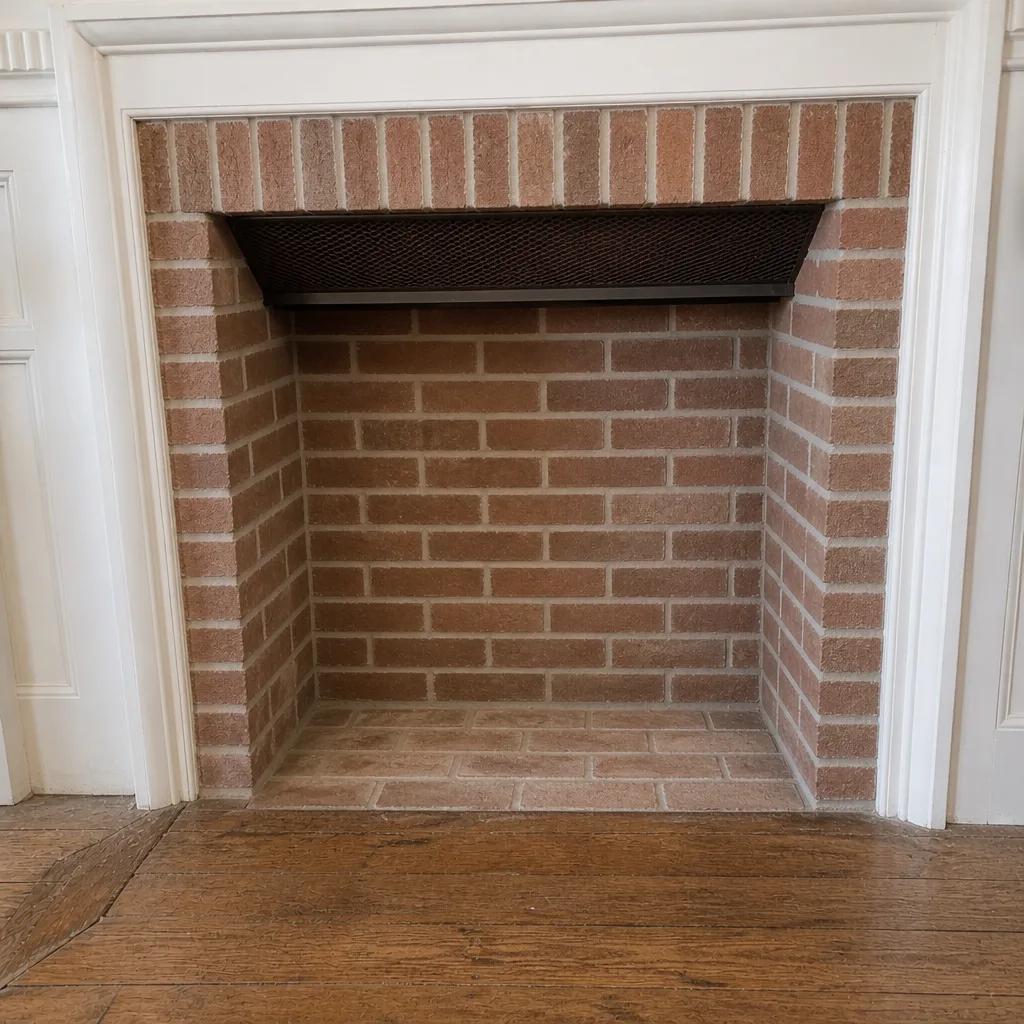
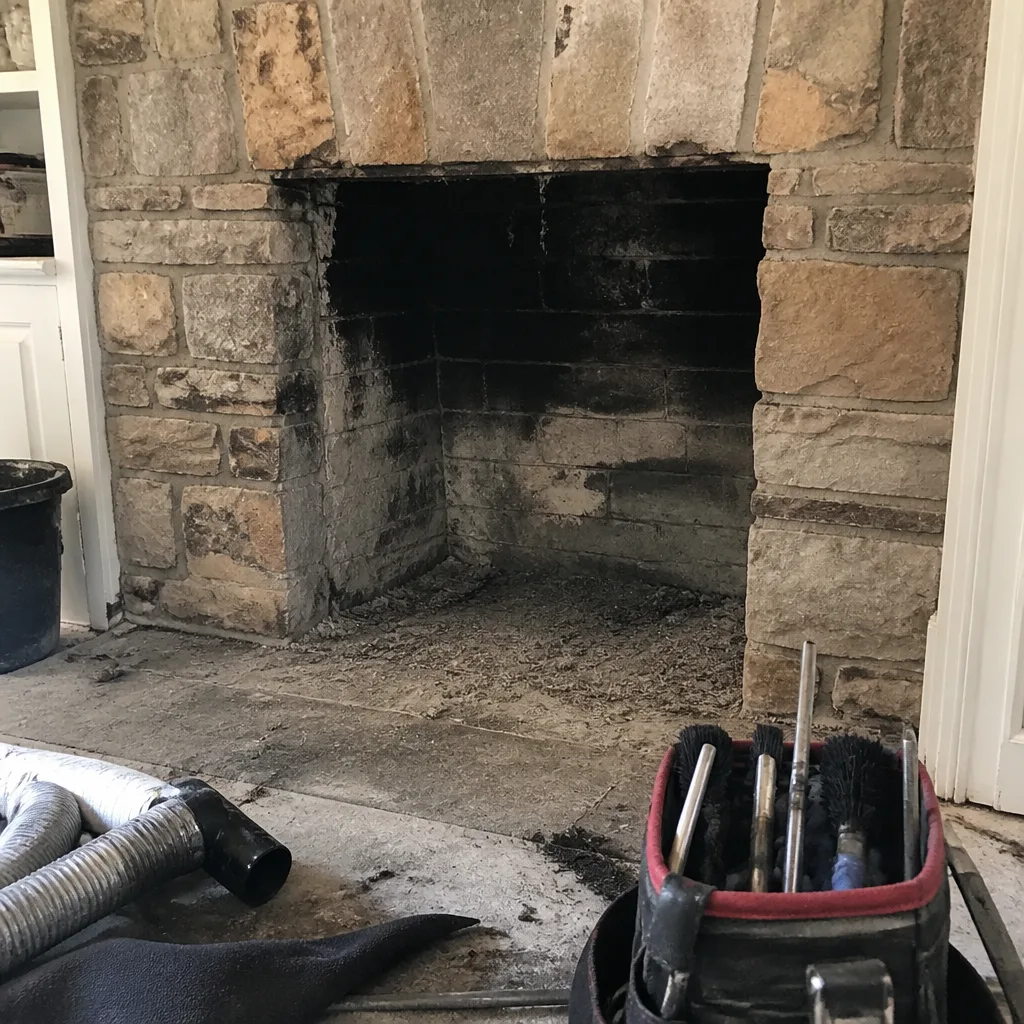
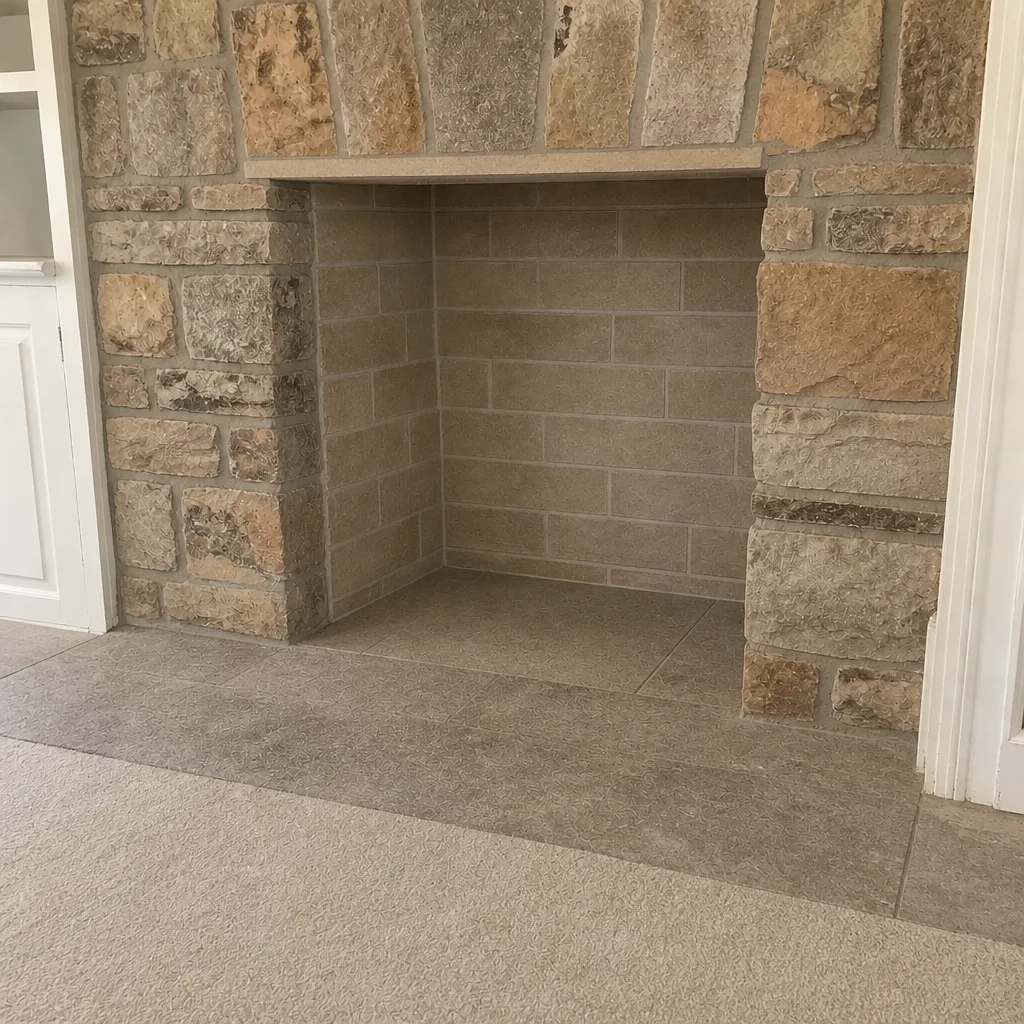
See the difference
 Before
 After
 Before
 After
 Before
 After
When to Call a Professional
Call a professional if you’ve had a chimney fire, even a small one, because the flue needs an inspection before it’s used again. Call if you’ve moved into a new Charleston home and don’t know the chimney’s service history, if you’ve been through a storm and haven’t had the chimney looked at, or if you’re seeing glazed creosote or a heavy tar smell. Call if smoke backs up into the room, the fire drafts poorly, or the masonry shows cracks or crumbling mortar. And call for the routine annual sweep before the burning season. Charleston Chimney Cleaning offers free estimates in Charleston. Call (866) 864-1983. We answer 24/7. Fast dispatch from 7am to 7pm, Sunday through Friday.
Frequently Asked Questions
The price depends on your flue size, creosote stage, roof access, and whether the inspection turns up a repair. We don’t give a flat number without seeing the chimney, but the estimate is free and the written estimate sets the final price. Call (866) 864-1983 for an exact quote. Estimates are free.
Only if the inspection shows the existing liner is failing, and the camera report is what tells you either way. A cracked or deteriorated liner lets combustion gases and heat reach the surrounding masonry, so it isn’t a cosmetic issue. If the lining is sound, we’ll tell you that. If it isn’t, you’ll see the evidence before you decide. Call (866) 864-1983 to book an inspection with a photo report.
About once a year for most wood-burning fireplaces, and sooner if you burn heavily, notice tar-like deposits or smells, or haven’t had the chimney inspected since you moved in. In Charleston’s climate, booking before the burning season catches moisture and cap problems while there’s time to fix them. Call (866) 864-1983 to schedule.
Creosote keeps building, and the humid Charleston air causes it to harden into denser, more flammable stages while moisture works on the masonry and liner at the same time. The result is a chimney that’s both a fire risk and more likely to need costly repairs instead of a routine cleaning. Skipping a sweep doesn’t make the deposits disappear; it just makes them harder to remove later. Call (866) 864-1983 and we’ll get you on the schedule.
It depends on what the inspection finds. Because we sweep, inspect, and repair with professional-grade components from brands like DuraFlex and HeatShield, many repairs can be handled without a second company and a second visit. Simple fixes like a cap replacement are often straightforward; larger liner work is estimated in writing first. Call (866) 864-1983 to talk through your situation.
Trade-specific certification, a camera inspection with a photo report on every visit, professional-grade materials, and a company that handles both the sweep and any repair it finds. A general contractor’s license alone doesn’t cover chimney work. If a recommendation comes without camera evidence, ask for it. Call (866) 864-1983 to book a visit with a team that does all three.
The Bottom Line
Chimney care in Charleston comes down to the climate. The humidity and mild winters mean creosote hardens faster and masonry stays damp longer than most homeowners expect, so low-use fireplaces still need an annual sweep and inspection. A proper visit includes a camera inspection with a report you can see, an honest assessment of the liner and masonry, and a written estimate that sets the final price. Brands like HeatShield and DuraFlex matter when a repair is needed, because professional-grade materials installed properly are what make a fix last. We inspect it, we fix it, and your chimney’s safety is a system we treat that way.
Charleston Chimney Cleaning offers free estimates for sweeps, inspections, and repairs. Call (866) 864-1983. We answer 24/7. Fast dispatch from 7am to 7pm, Sunday through Friday.
Written by the team at Charleston Chimney Cleaning.