
Last updated November 15, 2026
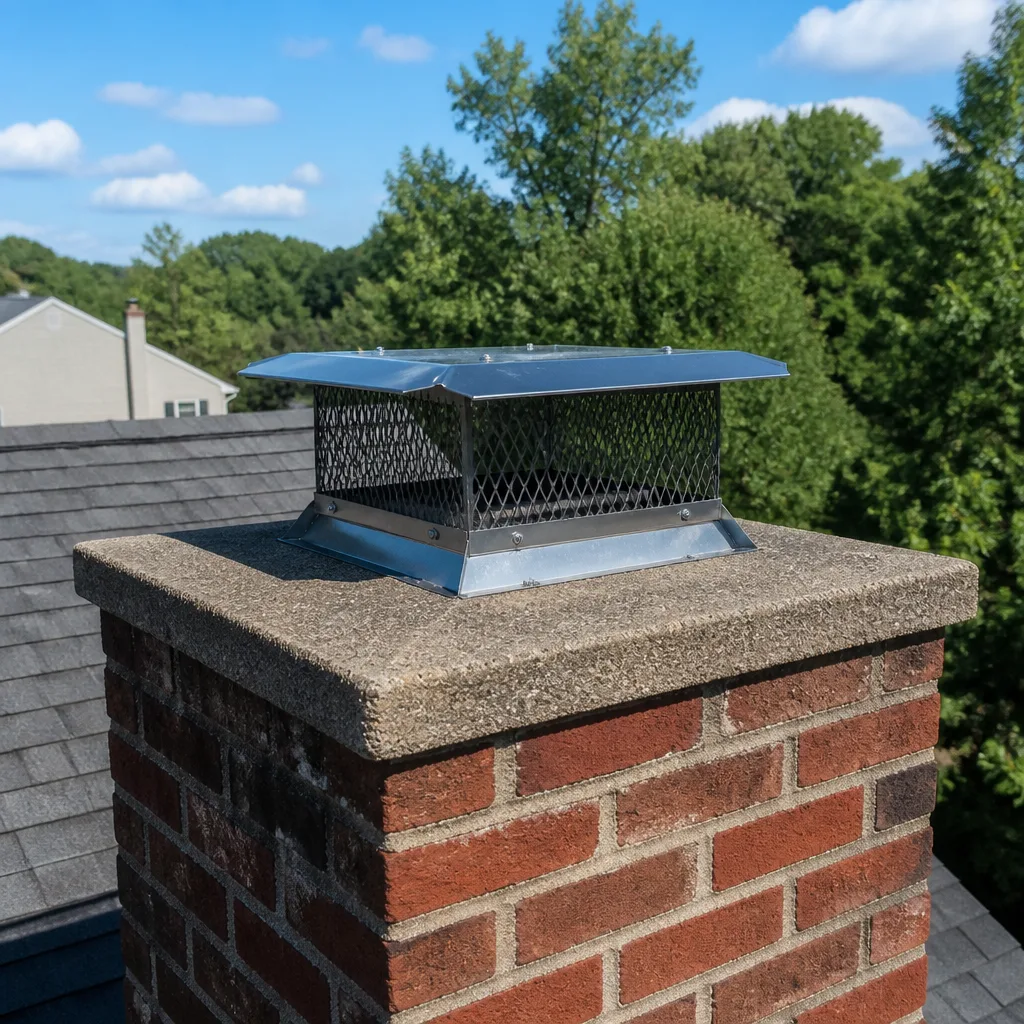 Sweep & inspection
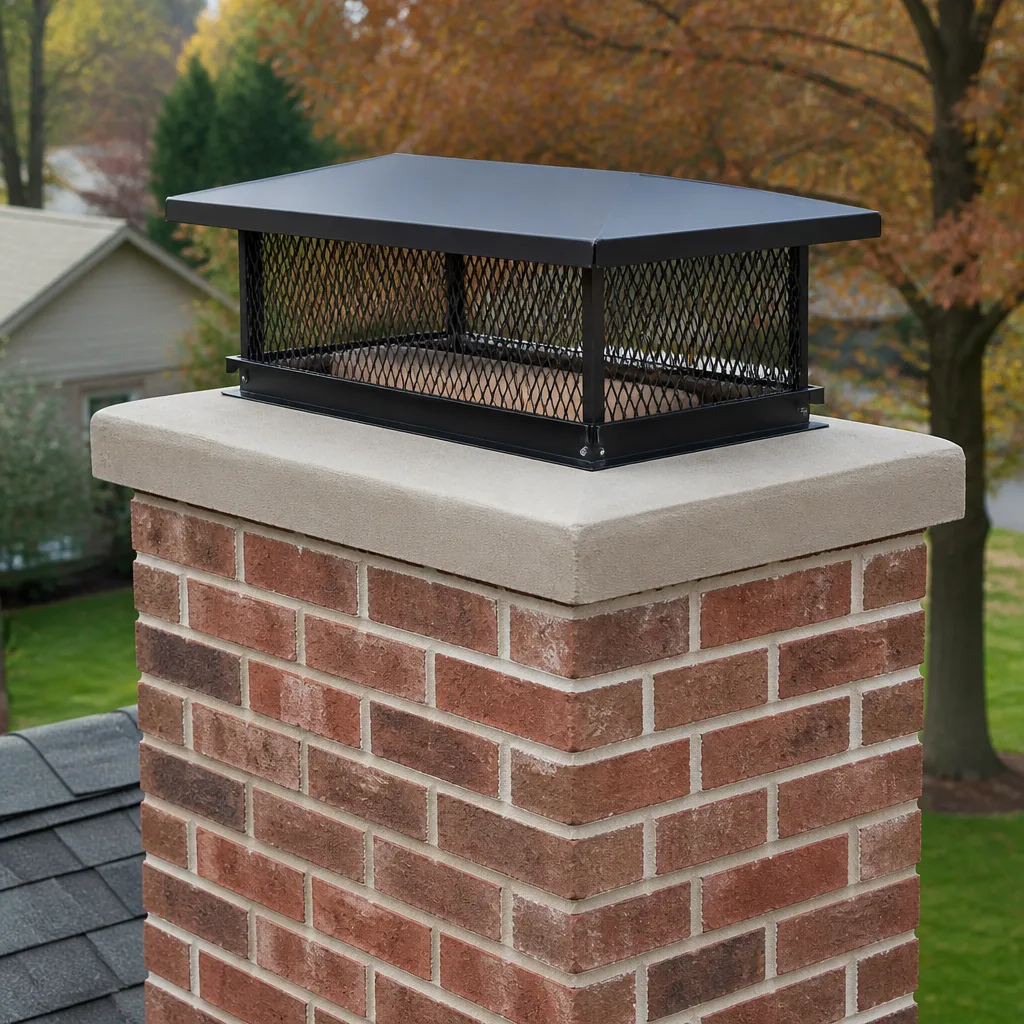 Caps & crowns
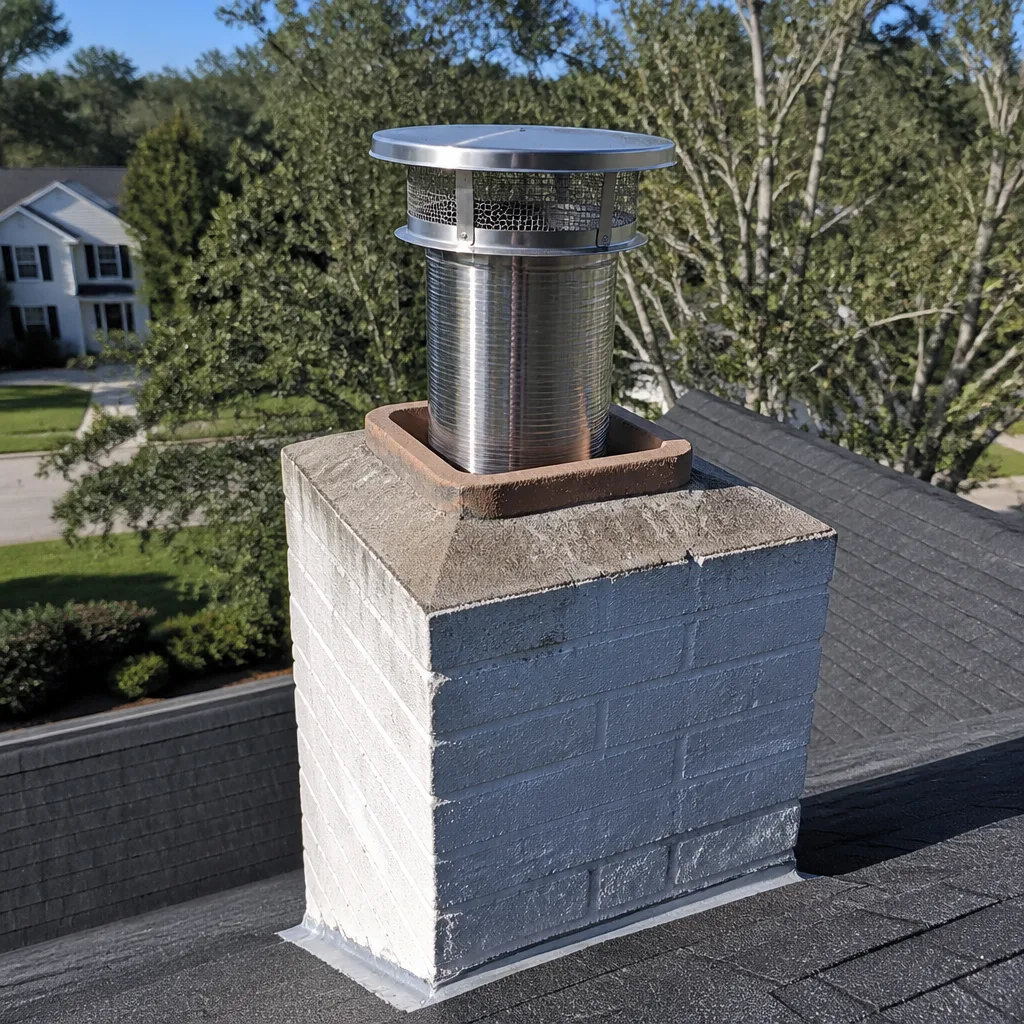 Flue relining
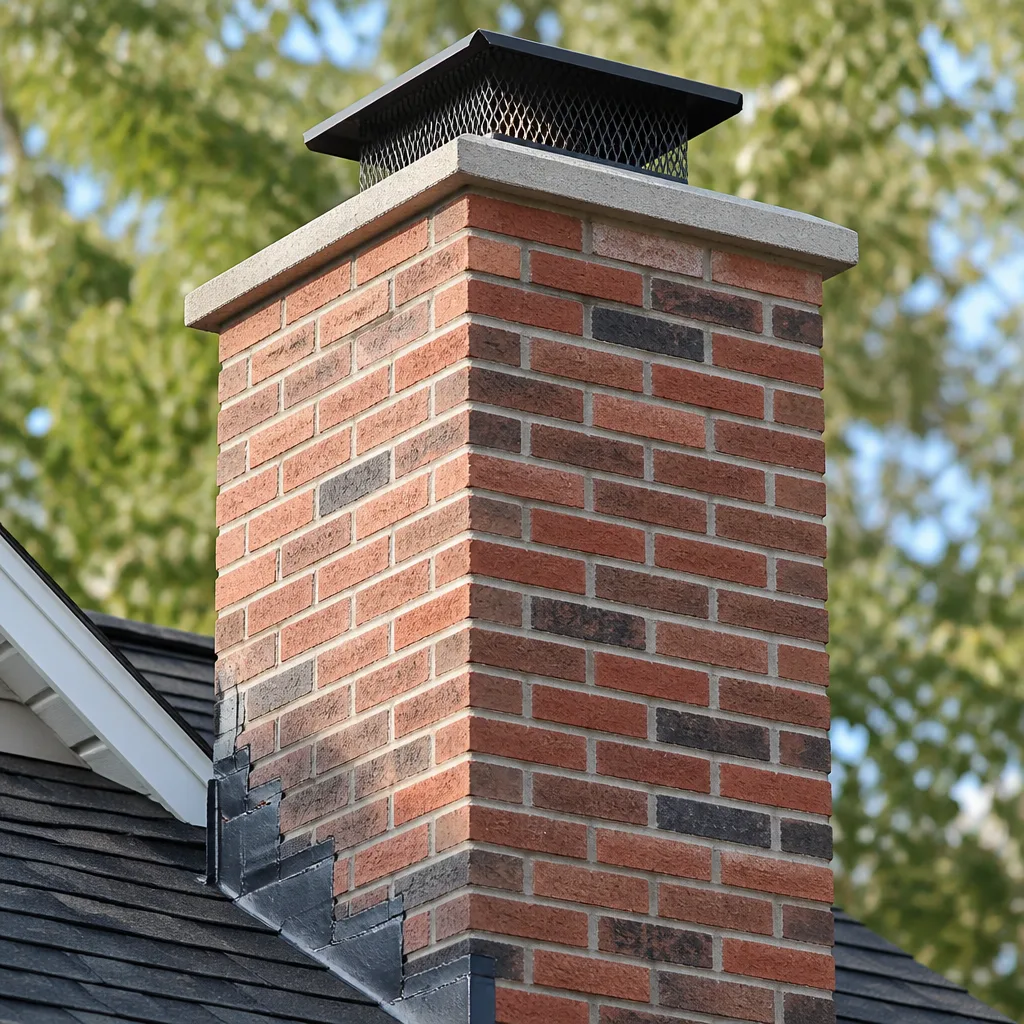 Masonry repair
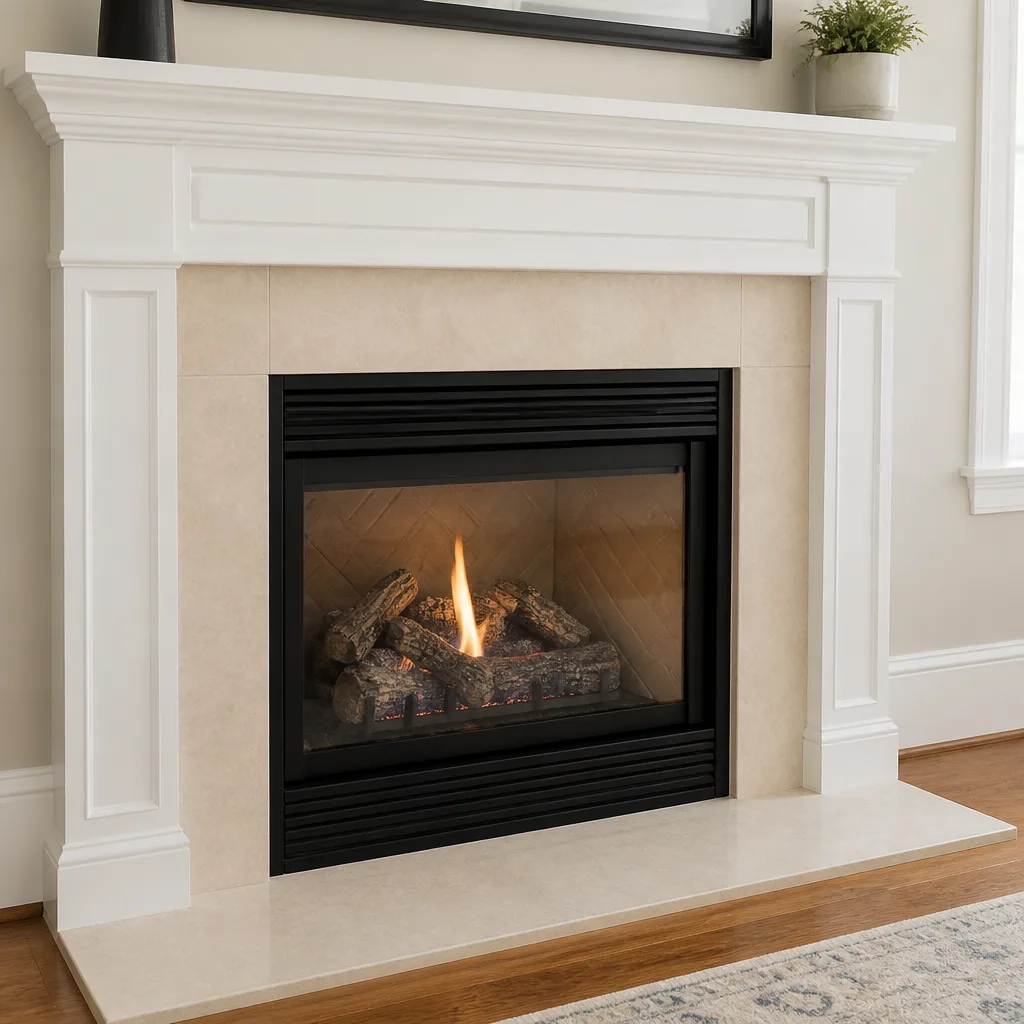 Gas fireplace service
Level 1 sweep and inspection to the NFPA 211 annual standard - flue, crown, cap, and flashing checked and photographed
Chimney sweep logs do not sweep chimneys. They loosen some creosote - which then falls where a brush and vacuum still have to collect it.
DIY vs Professional Chimney Cleaning: The Charleston Homeowner’s Decision Guide
Here’s the uncomfortable truth about chimney cleaning: the soot is the easy part. A brush kit and an afternoon will remove the visible creosote from your flue, and you’ll feel productive doing it. But sweeping a chimney has never been the thing that keeps a house safe. The thing that keeps a house safe is knowing what’s happening on the inside of the flue, in the joints, and behind the firebox – and that’s information no brush or flashlight can give you. In Charleston’s humid climate, the gap between “looks clean” and “is safe” is wider than most homeowners realize. This guide walks you through exactly where DIY makes sense, where it doesn’t, and how to tell the difference before you make the call.
Quick Answer
Professional chimney cleaning in Charleston is worth it for any wood-burning chimney you use regularly, because a trained sweep with an inspection camera finds defects – cracked flue tiles, mortar gaps, moisture damage, hidden creosote glaze – that a DIY brush-and-flashlight approach cannot see. DIY is genuinely appropriate for one thing: a visual check of the firebox interior before the first fire of the season. Everything past that surface layer needs eyes and tools that most homeowners don’t have and shouldn’t try to use on a chimney.
Styles & brands we work with
- Sweep & inspection
- Caps & crowns
- Flue relining
- Masonry repair
- Gas fireplace service
Table of Contents
- What a Professional Inspection Camera Reveals
- The One DIY Task Worth Doing
- Why Charleston Humidity Makes DIY Assessment Unreliable
- Liability and Insurance: What Happens When DIY Goes Wrong
- The Decision Matrix: Fireplace Type by Type
- A Step-by-Step Way to Decide
- What a Professional Sweep Actually Involves
- Where DIY Crosses Into Danger
What a Professional Inspection Camera Reveals That a Brush Cannot
A chimney inspection camera shows the inside of your flue in detail no flashlight can reach – and what it typically finds on an active wood-burning chimney is the kind of damage a homeowner would never know was there. A camera is pushed up the flue on a flexible rod while the technician watches a live feed from the firebox. What looks like a clean, straight clay tile from below can be a network of hairline cracks, spalling mortar joints, or disconnected tile sections when you see them from the inside.
Here’s what cameras routinely catch:
- Hairline cracks in flue tiles. These are the most consequential defect a camera finds. A crack the width of a hair is wide enough to let combustion gases – including carbon monoxide – pass through the tile and into the wall cavity or living space. You cannot see a hairline crack by shining a flashlight up a flue from the firebox. You can see it clearly on a camera.
- Mortar joint failure. The joints between flue tiles are meant to be sealed. Over time, heat cycling and moisture work them loose. When a joint opens up, gases leak sideways. From the firebox looking up, the joints look intact. From the camera, a joint can be visibly missing material.
- Creosote glaze. There are different grades of creosote, and the hard, shiny, glazed form is the dangerous one. It’s the residue that fuels a chimney fire. A brush can dislodge the soft, flaky grades, but glaze is bonded to the tile and needs different tools and technique. A camera shows you where it’s built up and how thick the layer runs.
- Offset and misaligned tiles. Older Charleston homes, especially in neighborhoods with original masonry work, often have flues where tiles have shifted. The misalignment creates a ledge where creosote collects and where a brush can’t reach cleanly. A camera shows the offset; a flashlight from below shows only a wall.
- Moisture damage and efflorescence. White, chalky deposits on the inside of a flue tile indicate moisture is getting in and pulling salts out of the masonry. Left alone, that process spalls the tile face. The deposits are on surfaces you can’t see from the firebox.
- Animal nests and debris blockages. Birds and squirrels get into uncapped flues. A blockage that isn’t obvious from below shows up instantly on a camera, along with the nesting material that can ignite.
None of this is meant to alarm you. It’s meant to explain why “I cleaned my chimney” and “my chimney is safe” aren’t the same statement. In our experience, the camera is where the real work of a professional chimney sweep in Charleston begins. If you want a jaw-dropping moment as a homeowner, watch the monitor while the technician points out a cracked tile you’d been looking past for years.
The One DIY Task That’s Genuinely Worth Doing
Before the first fire of the season, a visual walk-around of the firebox interior is a legitimate homeowner task – it’s low-risk, it takes five minutes, and it catches problems early. Here’s what to check, and what to do with what you find:
- Look at the firebox brick and mortar. Are there loose bricks, crumbling mortar joints, or cracks? A firebox is meant to contain heat. Deterioration there is a warning sign that the firebox needs repair before it’s used again.
- Check the damper. Open and close it a few times. It should move freely and sit flush when closed. A damper that’s stuck open wastes heat; one that won’t open fully restricts draft and pushes smoke back into the room.
- Look up the flue with a flashlight. You’re checking for obvious blockages – a bird’s nest, a fallen piece of tile, a heavy buildup of soot. If you see daylight at the top and no obstructions, that’s a good sign. If you see anything that looks like a blockage, stop and get it inspected.
- Inspect the smoke chamber and shelf. This is the slanted area above the damper. It’s a common collection point for creosote and debris. If it’s visibly coated in a thick, shiny layer, you need a sweep.
- Check the cap on the roof if it’s visible from the ground. Is the cap present, intact, and unobstructed? A missing cap lets rain, birds, and debris in – and it’s the reason most Charleston flues end up with moisture problems.
- Look for staining on the chimney exterior and around the firebox. White efflorescence on the brick, or dark staining around the firebox opening, is a sign moisture or smoke is escaping where it shouldn’t.
That’s the extent of safe DIY when it comes to chimney care. What you’re doing is a pre-flight check, not a maintenance action. If everything looks fine, you’ve confirmed your chimney is worth a professional inspection. If anything looks off, you’ve found the reason to call now rather than later. Do not try to sweep the flue yourself, and do not attempt any work on the flue liner, damper assembly, or chimney crown – those tasks belong to a trained technician.
Why Charleston’s Humidity Makes DIY Assessment Unreliable
Charleston’s climate is hard on masonry, and it’s harder on a homeowner’s ability to judge chimney condition by eye. The same humidity that makes summer afternoons feel thick also drives moisture into brick and mortar, and moisture damage is the class of problem that hides most effectively – it doesn’t look like soot, and it doesn’t announce itself from the firebox.
Here’s what happens in a lowcountry summer. The air holds moisture that condenses on cool chimney surfaces overnight and after rain. Brick and mortar are porous. Over many seasons, that moisture cycles in and out and slowly weakens the mortar joints and the flue tile surface from the inside. You’ll see the earliest signs as white, chalky staining – efflorescence – on the exterior of the chimney or, more tellingly, on the inside of the flue where a camera is the only thing that will see it.
Homeowners in drier climates have a simpler feedback loop: soot builds up, they sweep it off, and the flue looks and behaves like the last time. In Charleston, the flue can look fine from below while moisture is slowly spalling the tile face and loosening mortar joints. The visible soot layer is a poor proxy for the actual condition of the system. That’s the core reason a DIY sweep doesn’t tell you what you need to know in Charleston. You can clean the surface and still be blind to the damage a camera would show you in 30 seconds.
There’s a second-order problem too. When you sweep a chimney yourself and don’t remove the creosote that’s bonded to the tile, you leave a residue that can absorb moisture. In a humid climate, that residue keeps the tile surface damp longer, accelerating the very damage you’re trying to prevent. That’s the trap: a DIY sweep that looks productive can actually make the problem worse, and it doesn’t give you the evidence to know.
If you want help reading what your chimney is actually telling you, call Charleston Chimney Cleaning and we’ll set up a proper inspection. A camera inspection plus a written report is the only way to know what’s happening inside a Charleston flue.
Liability and Insurance: What Happens When DIY Goes Wrong
Here’s a question almost no homeowner asks until it’s too late: if a fire starts and the chimney was last cleaned by you, what does your insurer need to see? A professional chimney inspection and sweep record gives your insurer a documented, dated record of the chimney’s condition and the work performed. A DIY sweep gives you nothing but your own memory.
When a chimney fire claim is investigated, insurers routinely ask for maintenance records. That’s not a knock on DIY – it’s how the claims process works. Without documentation, a claim can be contested or denied on the grounds that the homeowner didn’t maintain the chimney to a reasonable standard. Fire from a neglected chimney is one of the classic “maintenance” exclusions in homeowners insurance, and it’s a common point of dispute. A dated inspection report and sweep record from a professional is exactly the documentation that closes that gap.
Liability runs the other way too. If you work on a chimney yourself and cause damage – cracked a flue tile with a brush, dislodged a damper component, damaged a cap in the process of inspecting it – your homeowners policy may or may not cover the resulting repair, and it’s the kind of thing insurers scrutinize. Professional work carries the contractor’s own insurance and a documented scope of work, which means the responsibility for the outcome sits with the contractor, not with you.
None of this is a scare tactic. It’s the practical answer to whether DIY is worth the savings. If your chimney has never had a professional inspection, you don’t have a record of its condition – and you can’t prove it was maintained when it matters. In the Charleston market, where masonry chimneys are common in older neighborhoods like Harleston Village, Radcliffeborough, and the streets off East Bay, that documentation is often the difference between a routine repair and a claim dispute. A single inspection visit gives you the record you’d want to have on file.
The Decision Matrix: Fireplace Type by Type
The DIY threshold isn’t the same for every chimney. What you burn, and how often, changes what’s safe to handle yourself and what genuinely needs a professional. Here’s how the three common scenarios break down:
Wood-Burning Fireplace or Wood Stove
This is the case where professional care is most warranted. Wood fires produce creosote, and creosote is what fuels chimney fires. A wood-burning chimney used with any regularity – even a few fires a week through the cooler months – needs an annual professional sweep and inspection. The DIY sweep removes some surface soot but leaves glaze and doesn’t find tile or joint damage. For a serious wood user, the answer is straightforward: professional sweep, annual inspection, no exceptions.
Gas Insert or Gas Fireplace
Gas appliances don’t produce creosote the way wood fires do, so the risk profile is different. But “less creosote” doesn’t mean “no inspection needed.” Gas inserts vent combustion gases and moisture, and the venting system and the firebox still need to be checked for corrosion, blockage, and proper venting. A blocked or improperly vented gas appliance is a carbon monoxide risk. The DIY threshold here is lower – the annual firebox check is fine as a homeowner task – but the venting and appliance connections should be checked by a technician. For gas inserts, the professional call is about safety systems, not soot.
Decorative-Only Fireplace (No Fires Burned)
If a fireplace is genuinely decorative and never used, the maintenance urgency is much lower. That said, an unused chimney is still a chimney – it can harbor animals, collect debris, develop moisture damage, and sit with a missing cap for years. A one-time inspection to establish condition is worth it. After that, an occasional check and a properly fitted cap on top is about the extent of what’s needed. If the fireplace has been converted to decorative and the flue is no longer in use, a sealed cap on a well-maintained flue is a reasonable long-term arrangement. This is the one category where DIY is close to sufficient, provided you understand what you’re dealing with.
One more variable matters in Charleston: how the home was built. Masonry chimneys in older homes carry more internal complexity – offsets, smoke chambers, unlined sections – and those are the ones where a camera inspection pays for itself the first time it finds something. If you’re unsure which category your chimney falls into, an inspection settles it. Call Charleston Chimney Cleaning at (866) 864-1983 and we’ll take a look.
A Step-by-Step Way to Decide
If you’re not sure where you fall on the DIY-versus-professional spectrum, work through this in order. Each step narrows the choice:
- Identify what your chimney actually serves. Wood-burning fireplace, wood stove, gas insert, or decorative-only. Write it down. The category sets the baseline.
- Check when the chimney was last professionally inspected. If you can’t answer, or if it’s been more than a year and you burn wood regularly, you need a professional inspection before you decide anything else.
- Do the safe DIY check first. Firebox brick, mortar, damper operation, visible flue obstruction, cap condition. This takes five minutes and is the only DIY step in this list.
- Note anything that looks off. Cracks in the firebox, damper issues, visible blockages, exterior staining, or a missing cap are all reasons to stop and call a professional. Don’t try to fix them yourself.
- For wood-burning chimneys, schedule the annual sweep and inspection regardless. The DIY check doesn’t replace the sweep. It just tells you whether there’s an urgent issue before the first fire.
- For gas inserts, have the venting checked. The gas appliance itself may be serviced by a gas technician; the chimney side – venting, termination, and the flue – needs a chimney professional.
- Keep the report on file. Whatever you decide, the professional inspection report becomes your maintenance record. Leave it with your homeowner documents. It’s the file you’ll want if you ever have to make an insurance claim.
- Repeat annually for wood, less often for gas and decorative. Wood-burning chimneys get an annual sweep and inspection. Gas inserts should be checked on a regular schedule. Decorative fireplaces need a one-time inspection and occasional checks.
If working through that list lands you on “call a professional,” you’re in the right place. That’s the call where a lot of Charleston homeowners discover something they didn’t know was there – and in our experience, the ones who catch it early are the ones who avoid the expensive repair.
What a Professional Sweep Actually Involves
A professional sweep in Charleston does more than run a brush up the flue. Here’s what a full visit looks like, so you know what to expect and what you’re paying for:
- Setup and containment. Drop cloths and a sealed work area around the firebox keep soot out of your home. Soot is fine and it gets everywhere; a proper setup is the difference between a clean room and a week of dusting.
- The sweep itself. Specialized rotary brushes sized to the flue clear the creosote and soot from the flue walls. The technician works from the top down or bottom up depending on the chimney’s layout, and uses the right brush type for the buildup present. Glazed, hard creosote needs a different approach than simple soot.
- The camera inspection. This is the part DIY can’t replace. The camera runs the full height of the flue and captures what a flashlight can’t – cracks, joint failure, misaligned tiles, moisture damage, hidden blockages. The findings become a written report with photos you can see and keep.
- The firebox and smoke chamber check. The technician checks firebox brick and mortar, the damper, and the smoke chamber for damage and buildup. This is where a crack in the firebox, or creosote glazed onto the smoke chamber shelf, shows up.
- The exterior check. Cap condition, crown condition, flashing, and visible masonry. A missing or damaged cap is one of the leading causes of the moisture problems we see in Charleston, and it’s often a quick fix.
- The written estimate. If anything needs repair, you get a written estimate and photos of the problem. No work happens without your approval.
The reason this matters as much as the sweep is that a chimney is a system – flue, firebox, cap, and venting all work together, and a problem in any one of them affects the others. Professional-grade materials matter here too. When a cap needs replacing, the difference between a generic hardware-store part and a properly rated chimney cap is measured in how long it lasts and how well it seals. The same is true when a flue needs relining: a flexible liner system like DuraFlex or a liner-resurfacing application like HeatShield is not the same as a quick patch. We work with industry-recognized brands including DuraFlex, HeatShield, Gelco, and Olympia Chimney because a repair should match the chimney’s actual condition, not the lowest available part.
For a full picture of what happens during a sweep visit, see our chimney sweep page. If the inspection turns up damage, the repair scope is spelled out on our chimney repair page. And for the wider context of how chimney care works in this climate, our Charleston page is a good starting point.
Where DIY Crosses From “Fine” Into “Dangerous”
There are parts of a chimney where a homeowner should never work, and the reason is simple: they’ll either get hurt or make the system less safe. Here’s the short list, and why each one matters:
- The flue liner. Removing or repairing a flue liner is not a homeowner task. A damaged liner is the most direct path for combustion gases into the home. A liner repair needs to be sized and installed to match the appliance and the flue – getting it wrong is worse than leaving it alone. This is a job for a trained technician.
- The chimney crown and the top of the flue. Working on a roof, on a chimney, on a ladder, is a fall risk. Any repair at the top of the chimney involves height work and a stable footing. Don’t do it yourself; the injury risk alone isn’t worth it.
- The damper assembly. A damper that’s stuck or damaged can look like a simple fix. In practice, a mismatched or improperly installed damper can create a carbon monoxide hazard. If your damper is not operating freely, get it inspected.
- Any part of a gas insert’s venting or connections. Gas appliances carry a carbon monoxide risk. Don’t open, disconnect, or modify gas venting. That’s a job for a qualified technician – and the safety check is the whole reason a gas insert needs professional care.
- The chimney cap and flashing. It’s tempting to climb up and replace a missing cap yourself. A cap replacement done wrong can leak, and a flashing repair done wrong can channel water into the chimney structure. Material choice and installation matter; a cap needs to be the right fit for the flue, which is why we stock the correct caps rather than improvise.
The pattern is simple: anything inside the flue, anything at the top of the chimney, anything involving gas, and anything that affects how gases vent belongs to a professional. The firebox visual check is yours. The rest is the technician’s. Our technicians have up to experience, and they’ve seen what happens when a homeowner takes on a flue repair that was in over their head. That’s a list of problems a homeowner never wants to be on.
If any of that describes your situation – a stuck damper, a damaged cap, a flue you’re not sure about – call Charleston Chimney Cleaning at (866) 864-1983. We answer 24/7. Fast dispatch from 7am to 7pm, Sunday through Friday. A call outside dispatch hours is booked into the next opening.
Common Mistakes to Avoid
- Sweeping the flue and calling it “cleaned.” A DIY sweep removes the surface soot but leaves the glazed creosote that actually fuels a chimney fire, and it tells you nothing about the condition of the flue tiles. The chimney can look clean and still have a cracked tile hidden inside the flue.
- Assuming a clean-looking firebox means a clean chimney. The firebox is the one area you can see. The flue is the area that matters most, and the damage that causes chimney fires is on surfaces you can’t see from below. A camera is the only way to check the full flue.
- Ignoring moisture signs in a Charleston chimney. White, chalky staining on the brick or inside the flue is a sign moisture is already working on the masonry. In this climate, that’s not a cosmetic issue – it’s the start of tile spalling and joint failure. Don’t wait for it to get worse.
- Burning a chimney that hasn’t been inspected since you bought the house. A home inspection is not a chimney inspection. If you’ve never had a chimney-specific inspection camera up the flue, you don’t know what you’re dealing with. That’s true for a lot of homes in Charleston’s older neighborhoods.
- Doing a DIY sweep and skipping the annual professional inspection. The sweep is the cleaning. The inspection is the safety check. Skipping the inspection to save money skips the part that actually tells you whether your chimney is safe to use.
- Replacing a chimney cap with a hardware-store part. A cap needs to fit the flue, seal correctly, and be rated for the appliance. A poorly fitted cap lets water and animals in, which is worse than no cap at all. Correct parts matter.
- Climbing the roof to inspect the chimney yourself. Fall risk from a ladder on a roof is real, and a DIY inspection of the chimney top often causes more damage than it prevents. Work at the top of the chimney belongs to a technician with proper equipment.
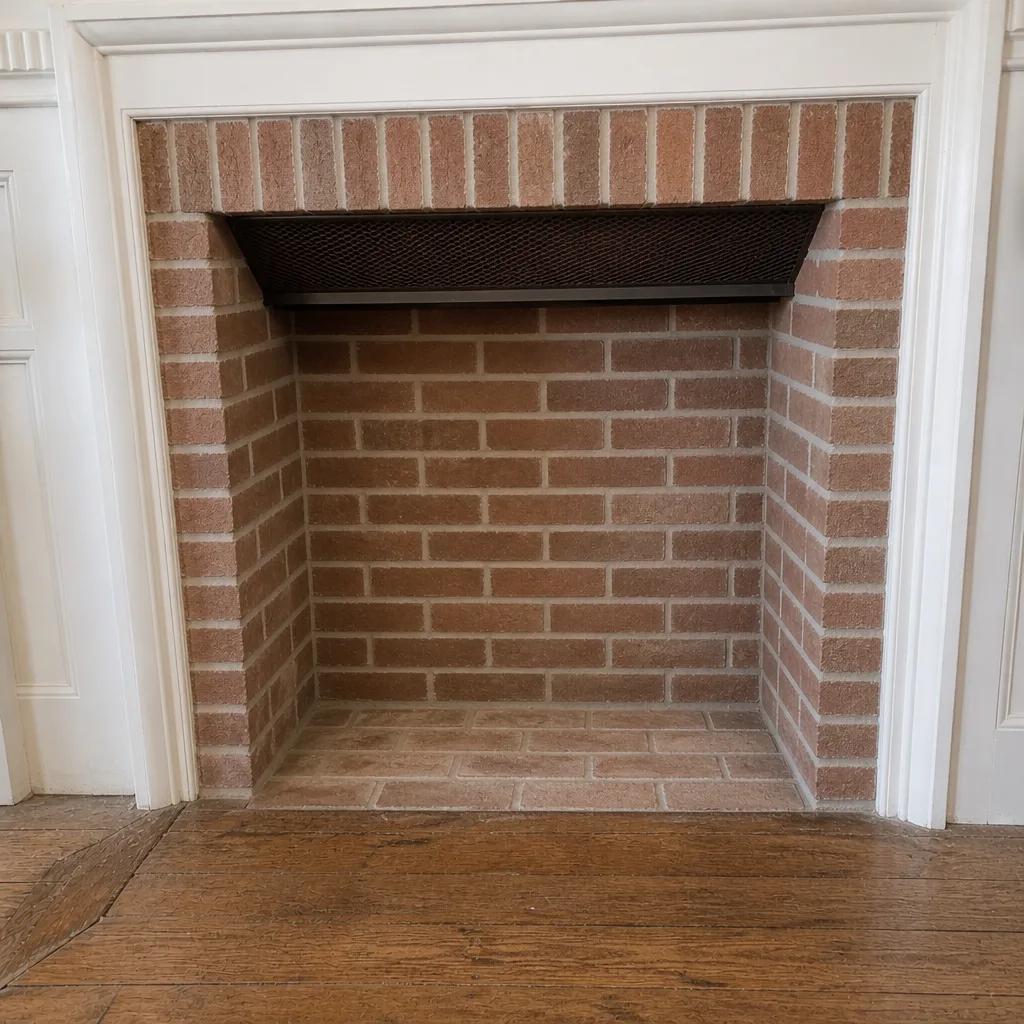
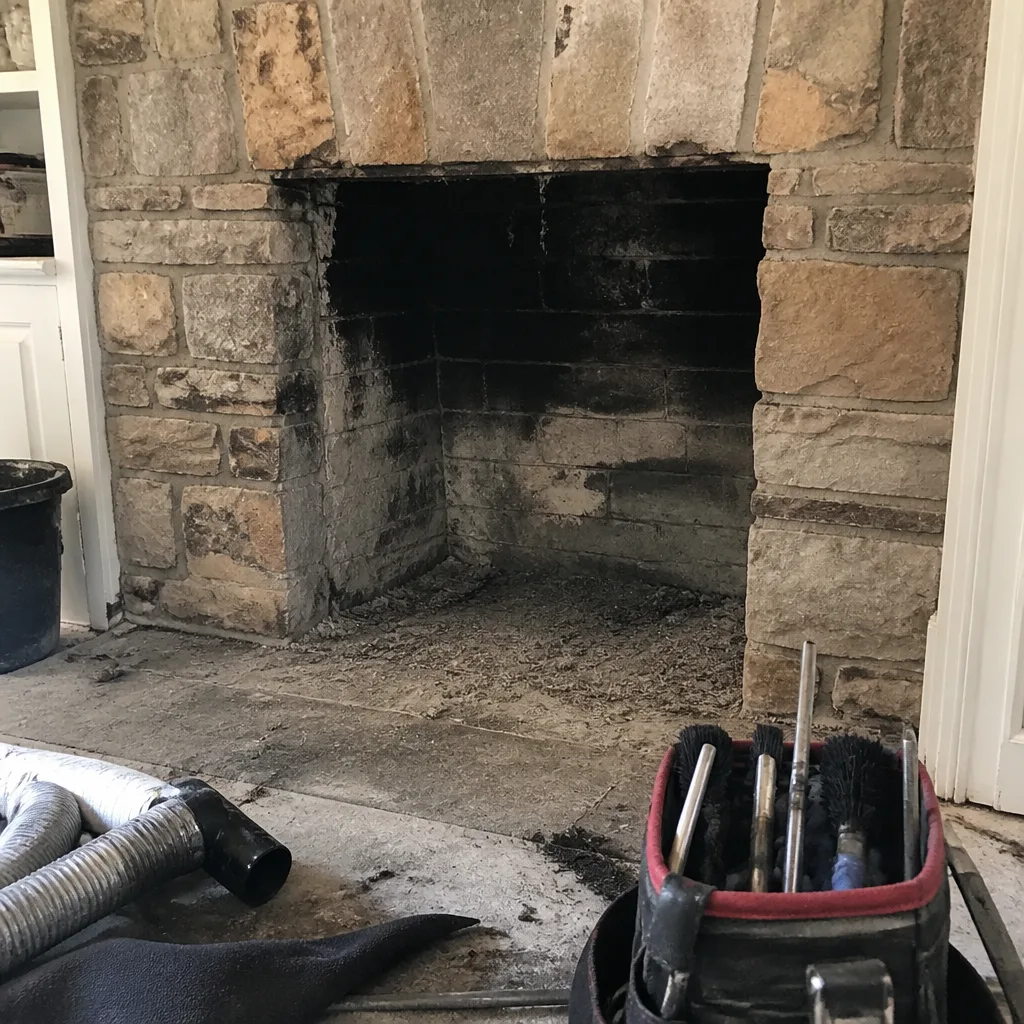
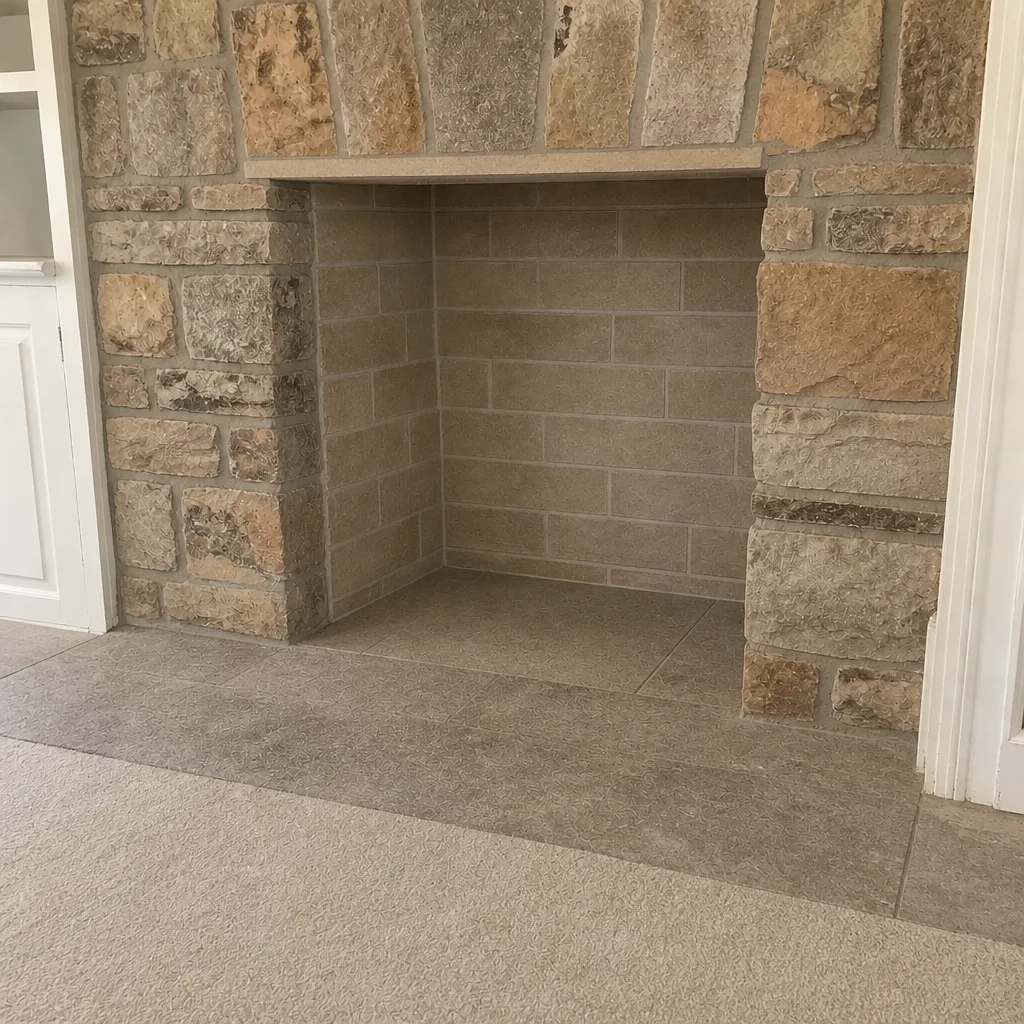
See the difference
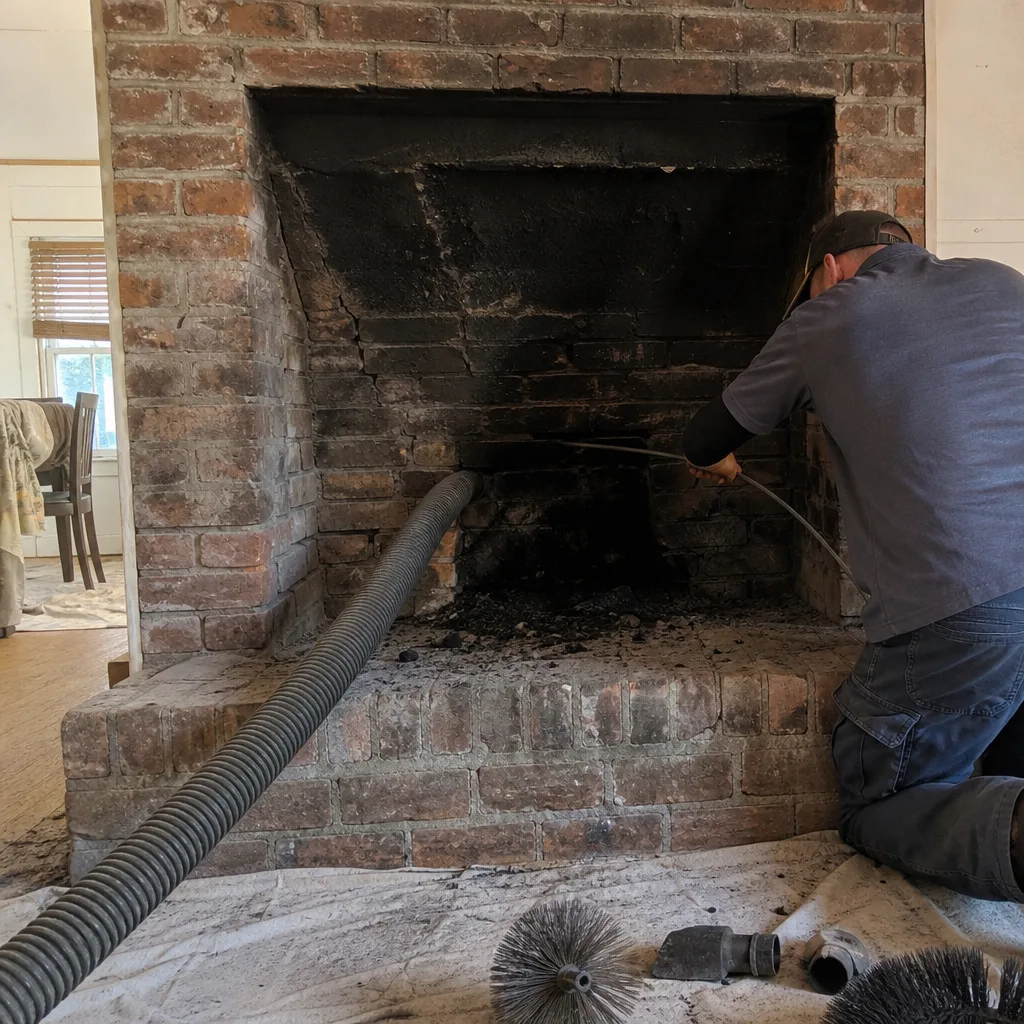 Before
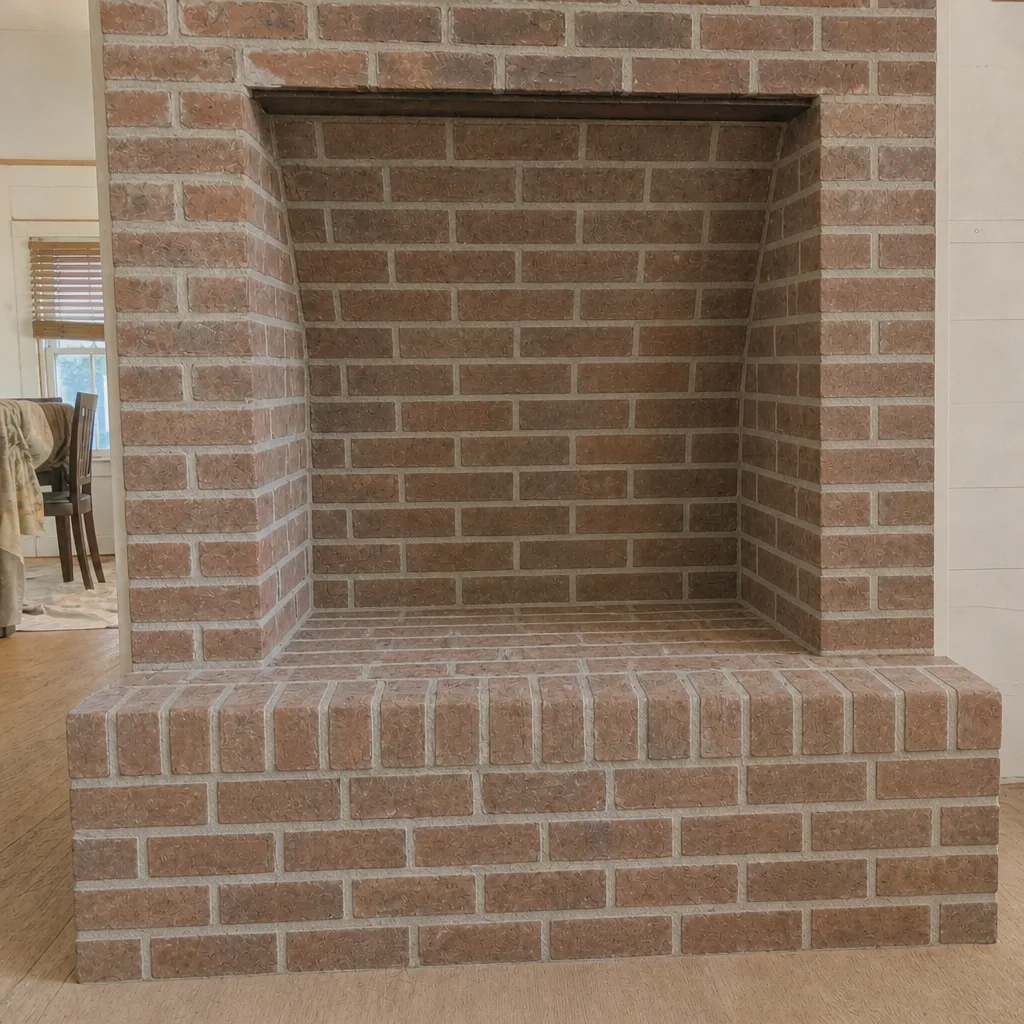 After
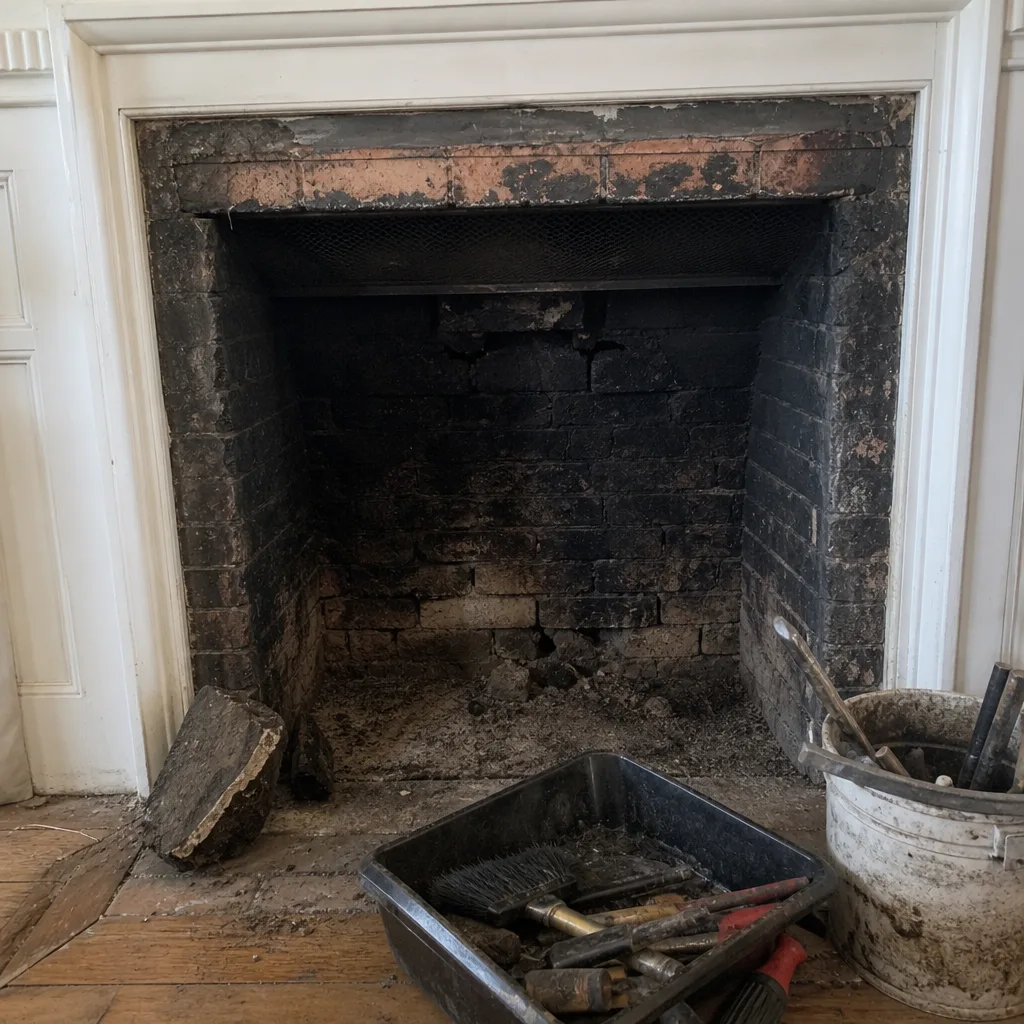 Before
 After
 Before
 After
When to Call a Professional
Call a professional chimney service if any of these apply: you burn wood regularly and haven’t had a sweep or inspection this year; the first fire of the season pushed smoke into the room; your damper doesn’t open and close freely; you see white staining or dark streaks on the chimney or firebox; a chimney cap is missing, damaged, or loose; you’ve never had a camera inspection of the flue, especially in a home with older masonry; or you’re a new homeowner who doesn’t know the chimney’s history. Any of these is a reason to book a visit, and the visit will tell you whether the issue is a cleaning, a repair, or nothing at all.
Charleston Chimney Cleaning offers free estimates in Charleston, and we handle the sweep, the inspection, and any repair that comes out of it in one place. We inspect it, we fix it – no handoff between two contractors, no waiting on a second appointment to learn what the first one found. Call (866) 864-1983 for a free estimate.
Frequently Asked Questions
You need a professional sweep if you burn wood in your chimney regularly, because a DIY brush clean removes visible soot but cannot detect cracked flue tiles, mortar joint failure, glazed creosote, or moisture damage. In Charleston’s humid climate those hidden defects are far more common than they look from the firebox, and they’re the actual safety concern. The safe DIY task is a firebox visual check before the first seasonal fire. The full flue inspection needs a camera and a trained technician. Call (866) 864-1983 for an exact quote – estimates are free.
Once a year for a wood-burning chimney you use regularly. That annual visit should combine a sweep with an inspection, because the sweep cleans the flue and the inspection checks the flue tiles, mortar, cap, and smoke chamber. Gas inserts need regular venting checks on their own schedule, and a decorative-only fireplace needs a one-time inspection to establish condition and then occasional checks. In Charleston’s humidity, don’t stretch the wood-burning chimney past a year without an inspection. Call (866) 864-1983 for an exact quote – estimates are free.
A chimney camera finds hairline cracks in flue tiles, missing mortar at the tile joints, glazed creosote bonded to the tile surface, misaligned or offset tiles, moisture damage and efflorescence on the inside of the flue, and blockages from animal nests or fallen debris. A flashlight from the firebox sees a wall. The camera sees the surfaces where combustion gases actually travel, and that’s where the dangerous defects sit.
It may not, or it may contest the claim, because insurers often ask for maintenance records when a chimney fire is investigated and a DIY sweep leaves no documentation. A dated inspection report and sweep record from a professional is the record that shows the chimney was maintained. If you’ve never had a professional inspection, you have no record of the chimney’s condition to show. The inspection is the piece that protects the claim.
Surface cleaning is low-risk, but the moment work involves the flue liner, the chimney crown, roof-height work, the damper assembly, or gas venting, it’s not a safe DIY task. Those areas carry fall risk, carbon monoxide risk, or both, and getting them wrong makes the system less safe than leaving it alone. Care doesn’t remove the risk – the right tools, training, and equipment do. Our technicians have up to experience and we’d rather you call than climb. Call (866) 864-1983 for an exact quote – estimates are free.
Yes. A blocked flue, a damaged flue liner, a failed mortar joint, or a misaligned tile all give combustion gases – including carbon monoxide – a path out of the flue and into the home. Those defects are exactly what a camera inspection finds and what a DIY sweep cannot detect. If you have any doubt about your flue, a professional inspection is the way to rule it out. Call (866) 864-1983 for an exact quote – estimates are free.
The Bottom Line
The DIY debate about chimney cleaning usually focuses on tools and elbow grease. The real question is what you can see. A brush removes soot and nothing more, while the defects that cause chimney fires and carbon monoxide problems – cracked flue tiles, failed mortar joints, glazed creosote, moisture damage – live behind a camera. In Charleston’s humid climate, that gap between “looks clean” and “is safe” is wider than in drier places, and the visible soot layer is a poor guide to the real condition of the flue. Do the firebox visual check yourself before the first fire of the season. Then have a professional sweep and camera inspection handle the flue, the cap, the damper, and everything above. It’s the only way to know, and it’s the record you’ll want if you ever need it.
Charleston Chimney Cleaning handles the sweep, the inspection, and the repair in one place. We inspect it, we fix it, and we use industry-trusted materials – DuraFlex, HeatShield, Gelco, Olympia Chimney, Famco, and Copperfield – because a repair is only as good as the parts in it. Estimates are free and the price is set by the written estimate. Call (866) 864-1983. We answer 24/7. Fast dispatch from 7am to 7pm, Sunday through Friday. For the full range of what we do, start at Charleston Chimney Cleaning.
Written by the team at Charleston Chimney Cleaning.